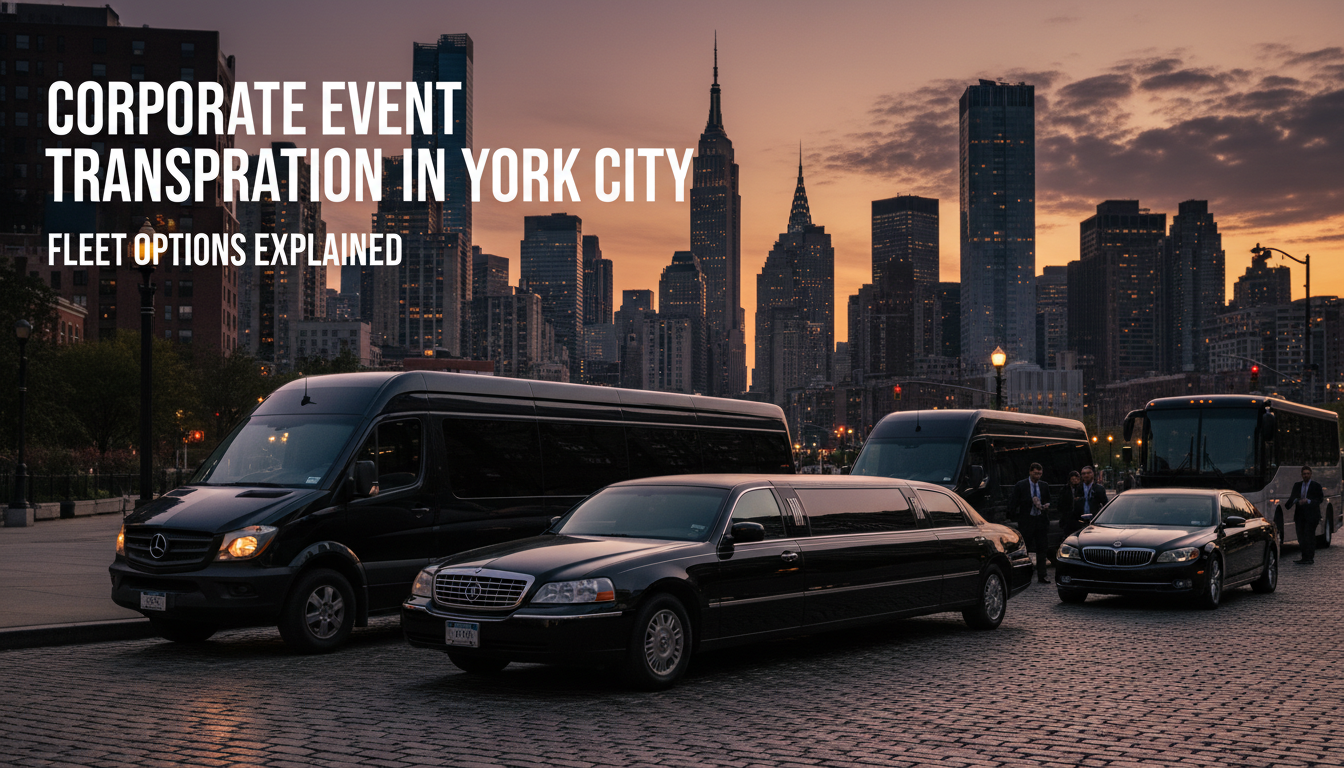
Corporate Event Transportation in New York City: Fleet Options Explained
When it comes to corporate event transportation in New York City, the stakes are higher than most people realize. You’re not just moving people from point A to point B — you’re setting the tone for your brand, managing complex logistics across one of the most congested cities in the world, and making sure executives, clients, and guests arrive on time and in the right frame of mind. Getting the fleet selection right is where it all starts.
Why Fleet Choice Matters More Than You Think
New York City is unlike any other market for ground transportation. Midtown traffic during a Tuesday lunch hour can be as unpredictable as a Friday evening in Times Square. Add in event-day congestion around venues like the Jacob K. Javits Convention Center, Pier 60, or Gotham Hall, and you quickly realize that vehicle choice isn’t just about aesthetics — it’s a logistical decision that affects your entire schedule.
The right fleet configuration also sends a message. Arriving in a clean, properly staffed black car communicates professionalism. Pulling up in a poorly maintained stretch limousine from a decade ago does the opposite. For corporate clients, the vehicle is part of the experience.
Beyond image, there are practical concerns: passenger capacity, luggage space, accessibility compliance, and whether a vehicle can physically access a venue’s loading zone or circular driveway. These details get overlooked in planning and cause real problems on the day.
Sedans and Executive Cars: The Everyday Workhorse
For most corporate needs — airport transfers, one-on-one client rides, or single-executive movements — a premium sedan is the standard choice, and for good reason.
What “Executive” Actually Means
Vehicles like the Cadillac Escalade, Lincoln Continental, or Mercedes-Benz E-Class are commonly used in this category. These aren’t standard rental cars. They’re maintained to a higher standard, driven by professional chauffeurs who are licensed and background-checked, and typically equipped with climate control, phone charging, and enough quiet cabin space for a working passenger.
Best Use Cases
-
- Airport pickups and drop-offs (JFK, LaGuardia, Newark)
-
- Transfers between Manhattan offices and midtown hotels
-
- Discreet executive movements where privacy matters
-
- Client hospitality on arrival day
A sedan works best when you’re moving one to three people with minimal luggage. For anything larger, you’ll need to step up in class.
SUVs and Luxury SUVs: When You Need More Room
The SUV has become the go-to vehicle for corporate groups of three to six passengers — especially when luggage is involved. Models like the Cadillac Escalade ESV or the Chevrolet Suburban offer significantly more cargo space than a sedan without sacrificing comfort.
In New York, SUVs also have a practical advantage: they sit higher, making them easier for passengers to enter and exit in formal attire. That matters more than it sounds when you’re helping a senior partner step out at a black-tie dinner on the Upper East Side.
A Note on SUV Logistics
One common mistake corporate planners make is booking SUVs without accounting for third-row passengers. The third row of an SUV is tighter and less comfortable for longer rides. For a 45-minute transfer from Midtown to Newark, it becomes a significant comfort issue. Be upfront with your provider about who’s sitting where.
Corporate Event Transportation in New York City: Sprinter Vans and Shuttle Solutions
When you’re coordinating group movement — say, 10 to 20 attendees shuttling between a hotel and a conference venue — a Sprinter van or executive shuttle bus is often the most efficient and cost-effective solution.
The Sprinter Advantage
Mercedes-Benz Sprinter vans typically seat between 10 and 14 passengers and can be configured in multiple ways. Executive configurations include leather seating, interior lighting, and sometimes fold-out tables for in-transit meetings. This is especially useful for teams arriving from out of town who need to debrief or prepare on the way to a venue.
Sprinters also work well in New York’s urban environment. They’re compact enough to navigate most Manhattan streets and can access loading zones that larger coaches cannot.
Shuttle Scheduling: Getting It Right
For events with staggered arrivals or multiple hotel pickup points, shuttle logistics require real planning. A best practice is to build 15-minute buffer windows into each run — New York traffic means even a short crosstown trip can take 40 minutes during peak hours. Work with your provider to map routes in advance and have a backup plan for delays.
Mini Coaches and Charter Buses: Moving Larger Groups
For 20 to 50 or more attendees, a mini coach (typically 24 to 35 seats) or full-size motorcoach (45 to 55 seats) becomes necessary. These vehicles are commonly used for:
-
- Off-site team events and retreats
-
- Venue shuttles during conferences
-
- Group transfers to/from airports with a single flight arrival
Charter buses in New York must comply with specific city regulations, including designated bus stop usage and restrictions on idling. A reputable provider will handle permits and route planning — but it’s worth confirming this upfront. The New York City Department of Transportation has specific rules for commercial bus operations, and violations can create delays or fines that fall back on the event organizer.
Full-size coaches also offer onboard amenities like restrooms, PA systems, and luggage bays — features that matter on longer trips, such as a group transfer from Midtown Manhattan to a venue in the Hudson Valley or the Hamptons.
Stretch Limousines: When the Occasion Calls for It
Stretch limousines are not the everyday choice for corporate transportation, but they still have a place — particularly for celebratory events, leadership recognition dinners, or client entertainment where the experience itself is part of the value.
A modern stretch limo or SUV limousine can seat eight to 14 passengers and typically includes fiber optic lighting, premium sound systems, and a bar setup. For a post-award dinner or a client hospitality evening in New York, that kind of environment sets a memorable tone.
The practical caveat: stretch vehicles require more space to maneuver and may not be suitable for all Manhattan venues. Always check with the venue’s valet or loading dock coordinator before booking.
What to Look for in a Corporate Transportation Provider
Fleet variety matters, but it’s not the whole picture. Here’s what separates a reliable corporate transportation company from one that will let you down on your busiest day.
Licensing and compliance. In New York, for-hire vehicles must be licensed through the New York City Taxi and Limousine Commission (TLC). Before booking, ask for the provider’s TLC license number and verify it. This is a basic compliance check that many event planners skip.
Chauffeur standards. Professional chauffeurs should be TLC-licensed, background-checked, and trained in corporate client protocols — not just navigation. Ask about driver vetting processes.
Real-time tracking and communication. For multi-vehicle events, you need a provider who can give you live updates. Whether that’s a dedicated coordinator or a dispatch system with real-time GPS, you should never be left guessing where your vehicles are.
Contingency planning. What happens if a vehicle breaks down? A credible provider has backup vehicles on standby and a clear protocol for handling disruptions. Get this in writing.
FAQ: Corporate Event Transportation in New York City
How far in advance should I book corporate transportation for a large event?
For events involving multiple vehicles or group shuttles, booking at least 3 to 4 weeks in advance is recommended. For peak periods — like September through November conference season or major industry weeks in New York — 6 to 8 weeks is safer. Last-minute availability exists, but your fleet options become limited quickly.
Is it better to use one provider for all vehicles or multiple vendors?
Using a single provider for an entire event simplifies communication and accountability significantly. If one vehicle is delayed, a single provider can redeploy resources. Splitting across multiple vendors creates coordination gaps and a lack of clear ownership when problems arise.
What’s the difference between a black car service and a limo service?
In New York, “black car” typically refers to for-hire vehicles dispatched through a base — often sedans or SUVs operating under TLC licensing. “Limo service” can include all vehicle classes, including stretch vehicles, coaches, and vans. Both operate under TLC regulation; the distinction is mostly about vehicle type and branding rather than regulatory category.
How do I handle transportation for guests with accessibility needs?
Most reputable providers can arrange ADA-compliant vehicles or wheelchair-accessible vans with advance notice. This should be flagged during the booking process — not on the day of the event. Confirm the specific vehicle, lift capacity, and chauffeur training for accessibility support.
What should I include in a transportation brief for my provider?
At minimum: event date, all pickup and drop-off addresses, estimated passenger counts per vehicle, scheduled timing for each run, a primary contact number on the day, and any special requirements (airport signage, meet-and-greet, specific dress code for drivers). The more detail you provide, the smoother the operation.
Conclusion
Corporate event transportation in New York City is a discipline in itself. The city’s complexity — its traffic patterns, venue access restrictions, and sheer scale — demands more than a basic car booking. Understanding your fleet options, from executive sedans to full-size motorcoaches, helps you match the right vehicle to each stage of your event and avoid the logistical surprises that derail even the best-planned programs.
The bottom line is this: plan early, verify credentials, ask the right questions, and choose a provider who treats your event with the same seriousness you do. When transportation works, no one notices — and that’s exactly the goal.
Ready to plan your corporate event transportation? Whether you’re coordinating a single executive transfer or a multi-vehicle conference shuttle across Manhattan, our team is here to help you figure out the right fleet, the right schedule, and the right logistics for your event. Reach out whenever you’re ready — email us at book@bubzlimos.com or call us at +1 (929) 541-5558. We’re happy to walk you through options, put together a quote, or simply answer your questions. No pressure — just straightforward help from people who know New York transportation inside and out.