


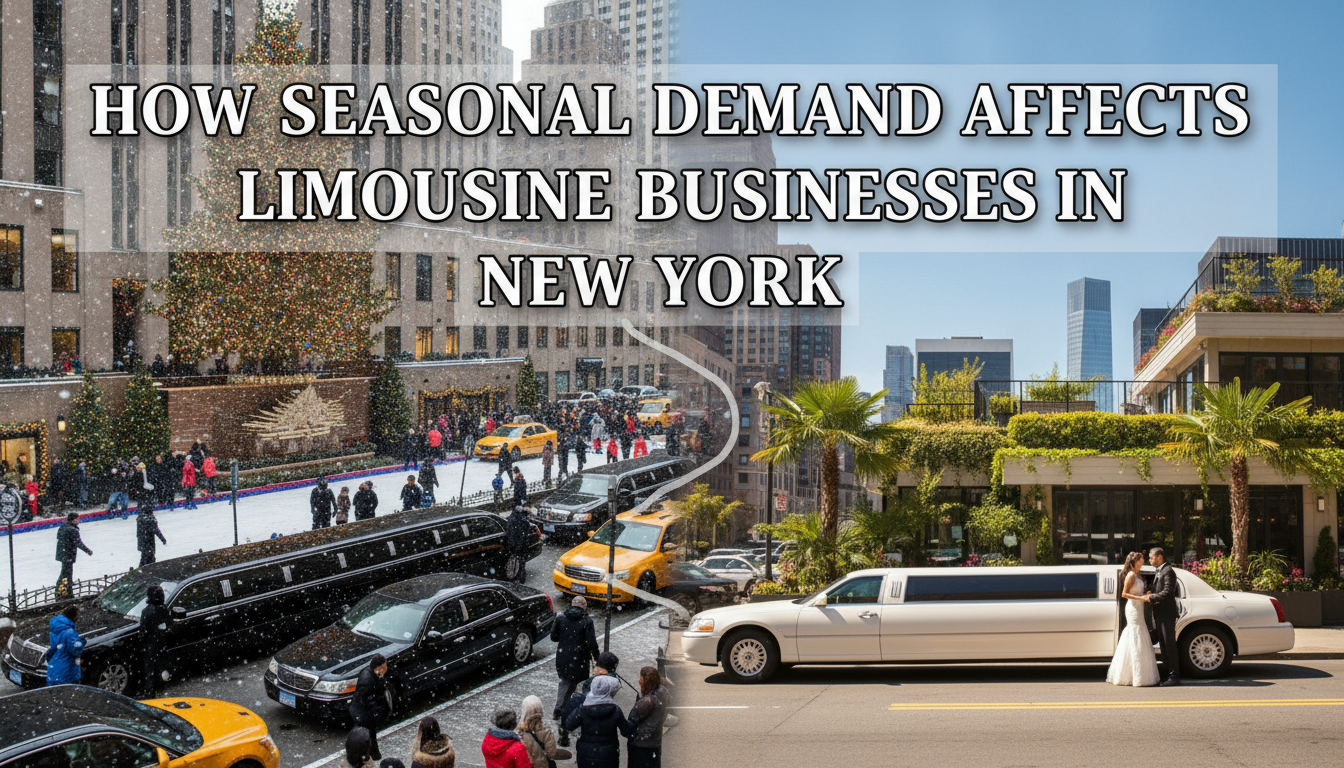
How Seasonal Demand Affects Limousine Businesses in New York
How New York’s Seasons Shape the Limousine Industry
Seasonal demand is one of the most powerful forces shaping how limousine businesses operate in New York City. Throughout the year, the city cycles through distinct peaks and slower stretches, and each phase creates a different set of pressures on scheduling, staffing, vehicle availability, and lead times. For anyone planning to book a luxury car service in New York — whether for an airport transfer, a corporate event, a wedding, or a holiday night out — understanding these seasonal rhythms helps you plan more effectively and secure the service you need when you need it.
Why Seasonal Patterns Matter More in New York Than Almost Anywhere Else
New York City is not a single-season destination. It draws visitors and generates events at every point in the calendar, and its size and density mean that even a single major event can create ripple effects across the entire transportation landscape. A limousine service operating in the five boroughs and the surrounding region is not simply responding to weather — it is responding to a layered combination of tourism cycles, corporate calendars, event seasons, holiday traditions, and school schedules, all of which shift demand in ways that are largely predictable but rarely identical from one year to the next.
Bubz Limos NYC, a licensed luxury car service covering all of New York City and the surrounding region, operates across this full seasonal range. The practical experience of navigating New York across all twelve months provides a clear picture of how demand shifts and what that means for passengers planning a booking.
Spring: The Season of Weddings, Proms, and Rising Corporate Travel
What Drives Demand from March Through May
Spring is one of the most active periods for luxury car services in New York. The combination of warming weather, improved road conditions, and a surge in social events creates sustained high demand across the metropolitan area. Weddings begin in earnest by late April and run strongly through June. Prom season, concentrated in May and early June, places significant pressure on vehicle availability — particularly for stretch limousines and larger vehicles — across Long Island, Westchester, and the outer boroughs.
Corporate travel also picks up in spring as businesses schedule conferences, client entertaining, and product launches. Midtown Manhattan, the Financial District, and areas around the Javits Convention Center on the West Side see increased chauffeured vehicle demand on weekday mornings and evenings.
Planning Considerations for Spring Bookings
If you are booking for a spring wedding or prom, lead time is critical. Saturdays fill quickly, particularly in May and early June. Vehicles suitable for wedding parties — sedans for the couple, SUVs for the wedding party, sprinter vans for larger groups — are often reserved weeks or months in advance. If your event date is firm, confirming your booking as early as possible is the most practical step you can take.
Spring weather in New York can include rain, fog, and occasional late cold snaps that affect road conditions. The Brooklyn-Queens Expressway, the FDR Drive, and approaches to bridges such as the Verrazano-Narrows and George Washington can slow significantly in wet weather. Build extra time into your schedule if you have a ceremony start time, a dinner reservation, or a theatre curtain to meet.
Summer: Peak Tourism, Airport Volume, and Event Congestion
The Busiest Period on the Calendar
Summer — roughly June through August — represents the highest sustained demand period for most limousine businesses in New York. John F. Kennedy International Airport and LaGuardia Airport both see dramatically increased passenger volumes as tourists arrive from across the country and internationally. Newark Liberty International Airport, frequently used for flights serving the New York metropolitan area, also handles elevated summer traffic.
Arrivals at JFK often funnel through the AirTrain connection and the lower-level arrivals roadway, which can experience congestion on its own regardless of what is happening on the Van Wyck Expressway or the Belt Parkway approaching the airport. A professional chauffeur service accounts for this by monitoring arrivals and adjusting pickup timing accordingly, though it cannot control how quickly customs and baggage claim move on a busy summer afternoon.
Events That Compound Summer Demand
Summer in New York brings outdoor concerts, festivals in Central Park, rooftop events, and a continuous stream of corporate gatherings. The U.S. Open tennis tournament in late August at the USTA Billie Jean King National Tennis Center in Flushing, Queens, creates concentrated demand for car service in an area that is already challenging to access during peak hours. The approaches along the Grand Central Parkway and Northern Boulevard can slow considerably on session days.
Broadway shows run continuously through summer, drawing visitors from around the world who need transportation to and from the Theatre District in Midtown. If your evening includes a performance, departure timing from your hotel or residence should account for traffic on crosstown streets, which can back up significantly between Fifth Avenue and Eighth Avenue during pre-curtain hours.
Practical Advice for Summer Travelers
- Book airport transfers well in advance during July and August, especially for early-morning departures from Manhattan to JFK or EWR where tunnel and bridge traffic can be unpredictable.
- Provide your confirmed flight number when booking so the service can monitor arrival status and adjust pickup timing if your flight is delayed or lands early.
- If you are traveling with significant luggage — multiple large bags, golf equipment, or oversized items — confirm vehicle capacity when you book rather than on the day of travel.
- Allow at least two hours before domestic departure times and three hours before international departures when traveling from Manhattan during summer peak hours.
Fall: Corporate Intensity, Fashion Week, and the Marathon
September Through November
Fall is widely considered the most sophisticated and demanding season for New York’s limousine industry. The overlap of corporate activity, major events, and continued tourism creates a dense and often unpredictable demand environment. New York Fashion Week in September draws designers, buyers, media, and high-profile clients who require discreet, well-timed chauffeured transportation across multiple venues in Midtown, the Meatpacking District, and Brooklyn’s growing fashion footprint.
The United Nations General Assembly, held each September at the UN complex on the East Side, creates remarkable congestion across a wide area of Midtown and the Upper East Side. Street closures, security perimeters, and escort convoys for visiting heads of state can make routes along First, Second, and Third Avenues unpredictable for extended periods. A service with experience navigating these conditions will reroute through alternative corridors — the Midtown Tunnel, the Queens-Midtown area, or surface streets further west — but travel times during UNGA week should never be treated as predictable.
The TCS New York City Marathon in early November is another event that reshapes the city’s transportation geography for an entire day. Major bridge crossings, including the Verrazano-Narrows and sections of the Willis Avenue Bridge, are closed or restricted to race traffic. Routes across all five boroughs are affected, and passengers with morning commitments anywhere near the race route on that Sunday should discuss logistics with their car service well in advance.
Winter: Holiday Peaks, New Year’s Eve, and Airport Season
The Holiday Surge
November and December represent another major demand spike, driven by holiday social events, corporate year-end parties, and the enormous volume of travelers moving through New York’s airports before Thanksgiving and around Christmas. The holiday retail season also draws significant tourist volume to Midtown, making Fifth Avenue and the surrounding blocks consistently congested throughout December.
New Year’s Eve is the single most compressed high-demand night of the year for limousine services in New York. Times Square and the surrounding blocks in Midtown are subject to road closures and pedestrian crowd management that begin hours before midnight. If your New Year’s plans involve any part of Midtown, your car service needs to understand your pickup address, your destination, and your desired timing in careful detail. Vehicle positioning in advance of closures is a standard professional practice, and advance booking for this night is not simply advisable — it is essential.
Winter Weather and Its Effect on Service Planning
Snowstorms and icy conditions affect every road in the metropolitan area and every approach to every airport. The Major Deegan Expressway, the Cross Bronx Expressway, the Long Island Expressway, and routes through Staten Island can all slow to a crawl or close temporarily in significant weather events. No car service can commit to arrival times during active winter storms with the same confidence as on a clear October morning, and any service that claims otherwise is not being honest with you.
What a professional chauffeur service can do is build appropriate buffers into departure plans, monitor forecasts, and communicate proactively if conditions are likely to affect your pickup. If you have a morning flight during a forecast snow event, the standard advice is to leave significantly earlier than you might on a clear day — and that guidance applies regardless of which car service you use.
How Seasonal Demand Affects Booking Availability and Lead Times
The practical implication of these seasonal patterns is straightforward: the closer your travel date falls to a known peak period, the more important it is to book early. This applies whether you are arranging a solo airport transfer, coordinating a group pickup from multiple locations, or organizing transportation for a wedding or corporate event.
During slower periods — typically mid-January through early March, excluding holidays — there is generally more flexibility, but that flexibility should not be taken for granted. Last-minute bookings are sometimes possible, but they depend on vehicle availability at the time you inquire, which cannot be guaranteed.
What to Confirm When You Book
Regardless of the season, a complete and accurate booking requires the following information:
- Date and time of pickup, including whether the time is firm or approximate
- Full pickup address, including building entrance details for hotels, residences, or event venues
- Destination address, including terminal or specific entrance if relevant
- Passenger count and any mobility or accessibility requirements
- Luggage details, particularly for airport transfers or longer trips
- Flight number and airline for airport pickups, so arrivals can be monitored
- Any stops along the route that need to be factored into timing
- Special requests related to the vehicle, the event, or the journey
Frequently Asked Questions
How far in advance should I book a limousine in New York during peak season?
There is no single answer, but for weddings, prom nights, New Year’s Eve, and events like the U.S. Open or Fashion Week, booking weeks or months ahead is strongly advisable. For standard airport transfers during busy summer or holiday weeks, booking several days to a week in advance reduces the risk of limited availability. The earlier you confirm, the more options you are likely to have.
Does the time of year affect pricing?
Demand-driven pricing is common across the limousine industry, and peak periods typically reflect higher rates or reduced availability. For specific pricing, contact Bubz Limos NYC directly with your travel details to receive accurate information for your date and route.
What happens if my flight is delayed and I arrive later than planned?
Providing your flight number at the time of booking allows the service to monitor your arrival status. A professional service will adjust pickup timing based on updated arrival information rather than holding to your original estimated time. Confirm how flight monitoring is handled when you make your reservation.
Are there events in New York that affect road access beyond what traffic alone would predict?
Yes. The United Nations General Assembly, the New York City Marathon, major parades on Fifth Avenue, and large concerts at venues like Madison Square Garden or Yankee Stadium all create road closures, restricted access zones, or significant pedestrian crowd conditions that go beyond ordinary traffic. If your travel date coincides with a known major event, discuss the specifics with your car service when booking.
Conclusion
New York’s limousine industry operates within one of the most complex and event-driven demand environments in the world. Each season brings its own pressures, its own traffic patterns, and its own logistical challenges — from summer airport surges at JFK and LaGuardia to the compressed chaos of a December evening in Midtown. Planning your booking with seasonal awareness, providing complete travel information, and allowing realistic time buffers for your commitments are the most effective steps you can take to ensure your experience matches your expectations.
To arrange a booking or request a quote with Bubz Limos NYC, reach out with your travel details including date, time, pickup location, destination, passenger count, and any relevant flight or event information.
Email book@bubzlimos.com or call +1 (929) 541-5558.
Related Posts
 How TLC Regulations Affect Limousine Businesses in New York City
 Exploring Availability of NYC Executive Limousine Taxis: Last-Minute & Emergency Bookings
 How to Grow a Profitable Limousine Business in New York
 Best Limousine Business Opportunities in New York City
 How Bubz Limousine Became the Go To Service for Antique Car Enthusiasts All Across New York
 Compassionate and Reliable Wheelchair Accessible Limousine Services Available Across New York City
 The Only Smoke Friendly Limousine Service in New York Where You Can Truly Relax and Unwind
 Top Reasons the Humvee Limousine Is the Most Talked About Party Vehicle in New York Right Now


