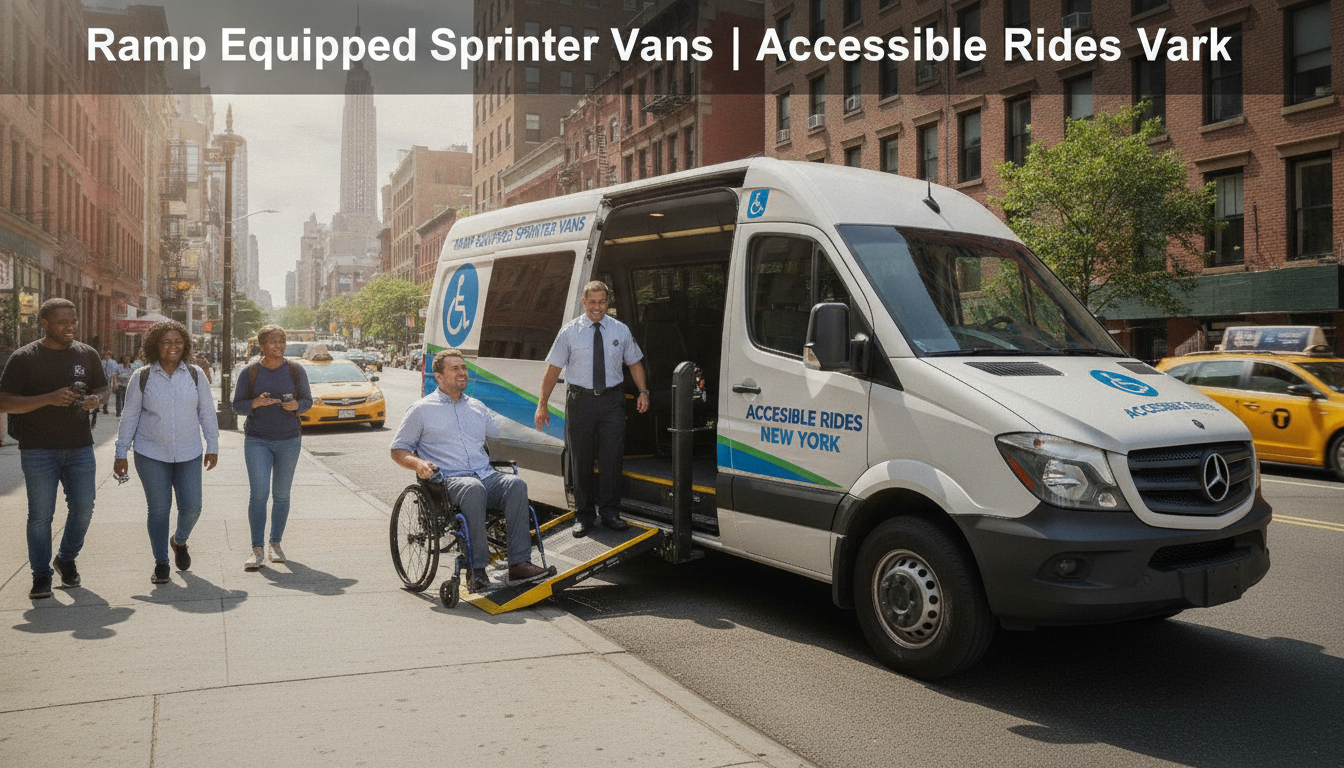
Ramp Equipped Sprinter Vans | Accessible Rides New York
Getting Around New York Shouldn’t Be a Barrier
For millions of New Yorkers and visitors who use wheelchairs or have limited mobility, navigating the city presents real, daily challenges. Subway stations with broken elevators, taxis that pass without stopping, rideshares that aren’t equipped — the frustrations add up fast. That’s exactly why ramp equipped Sprinter vans have become such a practical solution for accessible rides in New York, offering a reliable, dignified way to travel across the five boroughs and beyond.
This guide breaks down everything you need to know — how these vehicles work, what to look for in a provider, and why this style of transportation is changing the experience for wheelchair users, caregivers, and families navigating New York City every day.
What Makes a Sprinter Van Ideal for Accessible Transportation
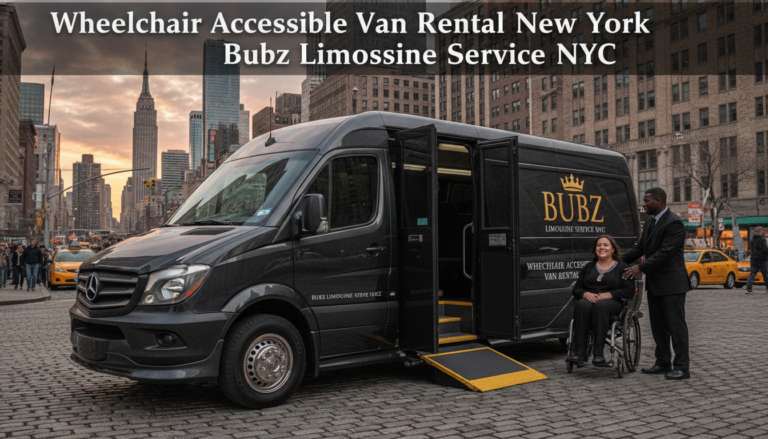
Not every large van is built with accessibility in mind. The Mercedes–Benz Sprinter has become the industry’s vehicle of choice for a few straightforward reasons — its high roofline, wide interior width, and long wheelbase create a cabin that can genuinely accommodate a power wheelchair or scooter without cramped maneuvering.
When properly converted, a Sprinter can hold one or two full-size wheelchairs alongside standard passenger seating. That means a family doesn’t have to split up across two vehicles just because one member uses a chair.
The Role of the Ramp System
There are two main ramp types you’ll encounter: fold-out ramps and fold-in ramps. Fold-out ramps deploy from the rear or side door and extend to the ground, giving a gradual incline for manual or power chairs. Fold-in ramps retract neatly into the vehicle floor when not in use, keeping the interior clean and unobstructed.
For power wheelchairs — which can weigh 250 to 400 pounds including the user — the angle and surface of the ramp matters enormously. A well-designed ramp system will have a non-slip surface, appropriate gradient (typically no steeper than 1:6), and side curbs to prevent wheels from sliding off during boarding.
Tie-Down and Securement Systems
A ramp is only part of the picture. Once a wheelchair user is inside, the chair needs to be secured using a four-point tie-down system. These straps anchor to the chair’s frame at the front and rear, preventing movement during sudden stops or sharp turns.
A lap and shoulder belt — separate from the chair’s own seatbelt — should also be provided. This dual-layer securement approach aligns with guidelines set by the American National Standards Institute (ANSI) and the Society of Automotive Engineers (SAE), both of which have published wheelchair transportation safety standards that reputable providers follow.
Ramp Equipped Sprinter Vans in New York: What the City Demands
New York City is a uniquely demanding environment for any transport service. Traffic patterns, parking restrictions, tight side streets in Brooklyn and Queens, and the sheer volume of stops required across a typical ride all create conditions that drivers and vehicles need to be genuinely prepared for.
A ramp equipped Sprinter van used for accessible rides in New York has to be maintained to a higher standard than a typical commercial vehicle. Ramp mechanisms, lift motors, and tie-down hardware need regular inspection — a mechanical failure mid-trip isn’t just an inconvenience, it’s a safety issue.
Licensing and Regulatory Requirements
In New York, vehicles providing for-hire transportation — including accessible vans — must be licensed through the New York City Taxi and Limousine Commission (TLC). Drivers must hold a TLC license, which requires a background check, drug testing, and a clean driving record.
Vehicles transporting wheelchair users must also meet federal ADA accessibility guidelines under the Americans with Disabilities Act, which set minimum standards for ramp slope, securement points, and interior clearance. When booking a service, it’s worth confirming that both the vehicle and the driver are TLC-licensed and that the van has been inspected for ADA compliance.
Who Uses Accessible Sprinter Van Services — and Why
The range of people who depend on this type of service is broader than many assume. Yes, it includes individuals who use manual or power wheelchairs full-time. But it also covers people recovering from surgery who are temporarily using a wheelchair or walker, seniors who find standard vehicles difficult to enter and exit, and individuals with conditions like multiple sclerosis or cerebral palsy that affect mobility in ways not always visible at a glance.
Medical Appointments and Non-Emergency Medical Transport
One of the most common use cases in New York is non-emergency medical transport (NEMT) — rides to dialysis centers, chemotherapy appointments, rehabilitation facilities, and specialist clinics. These aren’t optional trips. Missing them has direct health consequences.
For this reason, reliability and punctuality matter more in accessible transport than almost any other category. A service that consistently runs on time, communicates proactively about delays, and treats medical appointments with the seriousness they deserve is worth far more than one that’s marginally cheaper but inconsistent.
Airport Transfers
JFK, LaGuardia, and Newark all present accessibility challenges in standard rideshare or taxi scenarios. A dedicated accessible Sprinter van removes the stress — no hunting for a driver willing to accommodate a chair, no uncertainty about whether the vehicle will actually be equipped.
A well-run service will confirm vehicle configuration at booking, allow extra time for boarding and loading luggage, and have drivers familiar with accessible drop-off and pickup points at each terminal.
Events, Group Travel, and Family Trips
Sprinter vans are naturally suited to group travel, and that advantage extends into accessible configurations. A wedding where a grandmother uses a power chair, a corporate event with an attendee who uses a manual wheelchair, a family outing to a game at Citi Field — these scenarios all become smoother when the whole group can ride together in one vehicle.
Booking an Accessible Ride: What to Ask Before You Confirm
Not every service that advertises “wheelchair accessible” actually operates with the equipment or training to back it up. Before confirming a booking, it’s worth asking a few direct questions.
- What type of ramp does the vehicle use? Fold-out or fold-in, rear or side entry — this affects logistics depending on your chair type and boarding preference.
- What is the weight capacity of the ramp and securement system? Power wheelchairs can be heavy, and you want to confirm the system is rated appropriately.
- Are drivers trained in wheelchair securement? Proper tie-down technique isn’t intuitive — it requires specific training.
- Is the vehicle TLC-licensed? This is a basic compliance question that a legitimate New York provider should answer without hesitation.
- How much advance notice is required? Some services need 24 to 48 hours for accessible vehicles; others can accommodate same-day or short-notice requests.
These aren’t trick questions — they’re the kind of practical details that separate a service built around accessibility from one that treats it as an afterthought.
The Difference Between Accessible and Truly Accommodating
There’s a difference between a service that meets the legal minimum for accessibility and one that’s genuinely designed around the experience of the passenger. The first checks boxes. The second thinks through every step of the journey — from how the driver communicates when they arrive, to how they assist with boarding without being condescending, to how they handle the journey itself with a passenger who may need a smooth ride due to pain sensitivity or medical equipment.
Driver attitude matters. A driver who is patient, respectful, and knows their equipment creates a completely different experience from one who is technically compliant but visibly impatient. When evaluating a service, reviews from wheelchair users specifically — not just general five-star ratings — are one of the most honest signals available.
Frequently Asked Questions
What types of wheelchairs can be accommodated in a ramp equipped Sprinter van?
Most converted Sprinter vans can accommodate both manual and power wheelchairs, including larger power chairs and scooters. The key variables are width, length, and total weight. When booking, provide your chair’s make and model or dimensions so the provider can confirm compatibility — this is especially important for bariatric chairs or unusually large power wheelchairs.
How far in advance do I need to book an accessible ride in New York?
For planned trips like airport transfers or medical appointments, booking 24 to 48 hours in advance is generally recommended. Some providers can accommodate shorter notice, but accessible vehicles are in high demand and availability isn’t guaranteed for last-minute requests. Building in extra lead time, particularly for time-sensitive appointments, is always the safer approach.
Is an accessible Sprinter van more expensive than a standard rideshare?
Typically, yes — and for understandable reasons. Converted accessible vehicles represent a significantly higher upfront investment, require specialized maintenance, and need drivers with specific training. That said, prices vary widely between providers, and some insurance plans or Medicaid programs may cover non-emergency medical transport partially or in full. It’s worth checking with your insurer if cost is a concern.
Are the rides safe for passengers who use powered wheelchairs and rely on medical equipment?
When a vehicle is properly equipped and the driver is trained in securement protocols, travel in a ramp equipped Sprinter van is safe for power wheelchair users. If you travel with oxygen, a ventilator, or other medical equipment, inform the provider when booking — a good service will accommodate this and ensure the driver is aware before the ride.
Can I travel with a caregiver or family members in the same vehicle?
Yes — this is one of the main advantages of a Sprinter van configuration. Depending on the vehicle layout, there’s typically seating for several standard passengers alongside the secured wheelchair position, allowing a caregiver, family member, or attendant to ride together without needing a separate vehicle.
Accessible Rides New York: Finding a Service You Can Actually Trust
New York has no shortage of transportation options, but finding an accessible service that consistently delivers — reliable vehicles, trained drivers, honest communication — takes more than a quick internet search. Word of mouth from within disability communities and senior networks often surfaces the providers that have genuinely earned their reputation.
Ramp equipped Sprinter vans, when operated by a service that takes accessibility seriously, represent one of the most dignified, practical transportation solutions available in the city. They make it possible to get to a medical appointment without three phone calls and a prayer, to attend a family event without sitting separately from everyone else, and to move through New York on your own terms.
That kind of reliable, respectful transport isn’t a luxury. For a lot of people, it’s simply necessary — and it should be easy to access.
Ready to book or have questions about our ramp equipped Sprinter van service? Our team is here to help you find the right solution for your journey — whether it’s a one-time airport transfer or ongoing medical transport. Reach out at book@bubzlimos.com or call us at +1 (929) 541-5558. We’re happy to answer questions, provide a quote, or get your booking sorted quickly and simply.
Related Posts
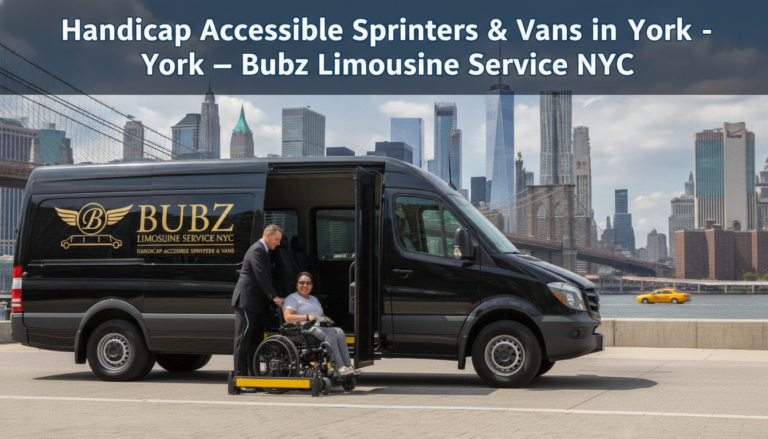 Handicap Accessible Sprinters & Vans in New York
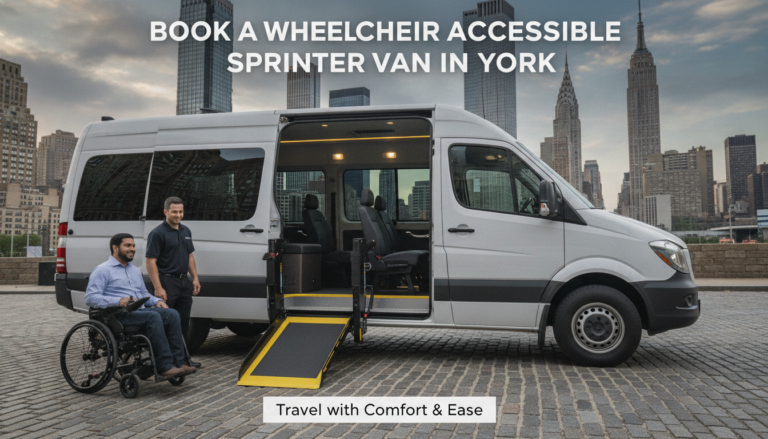 Book a Wheelchair Accessible Sprinter Van in New York
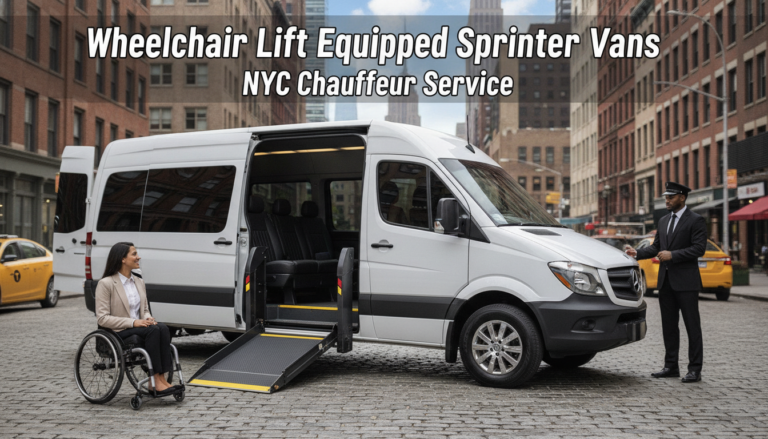 Wheelchair Lift Equipped Sprinter Vans | NYC Chauffeur Service
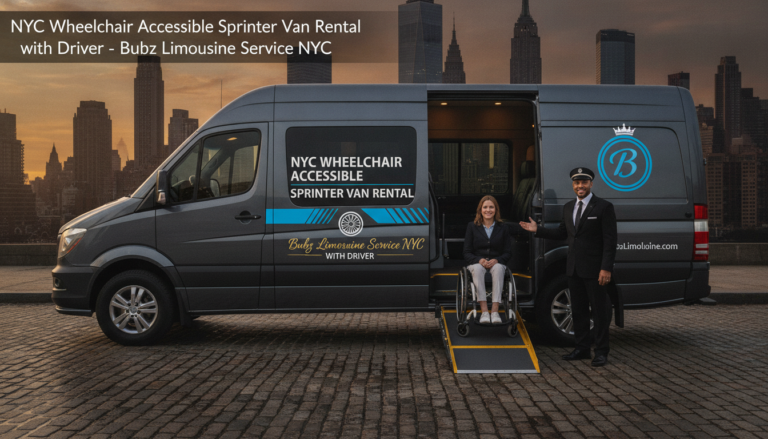 NYC Wheelchair Accessible Sprinter Van Rental with Driver
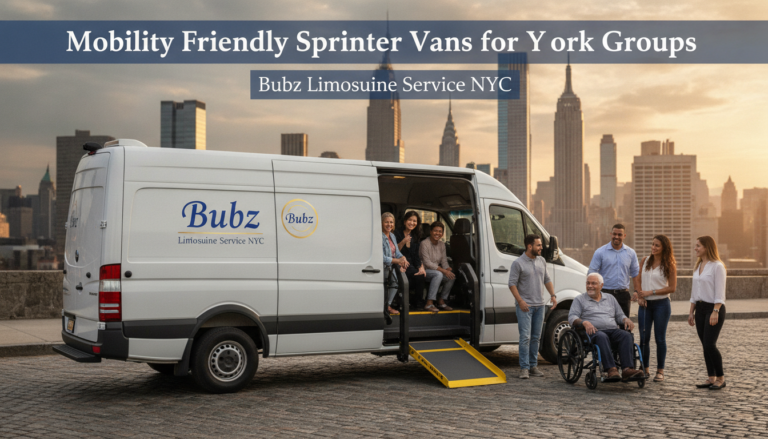 Mobility Friendly Sprinter Vans for New York Groups
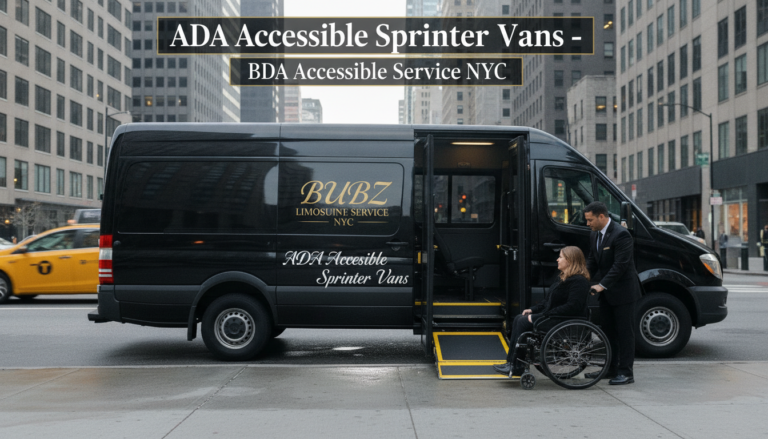 ADA Accessible Sprinter Vans – Bubz Limousine Service NYC
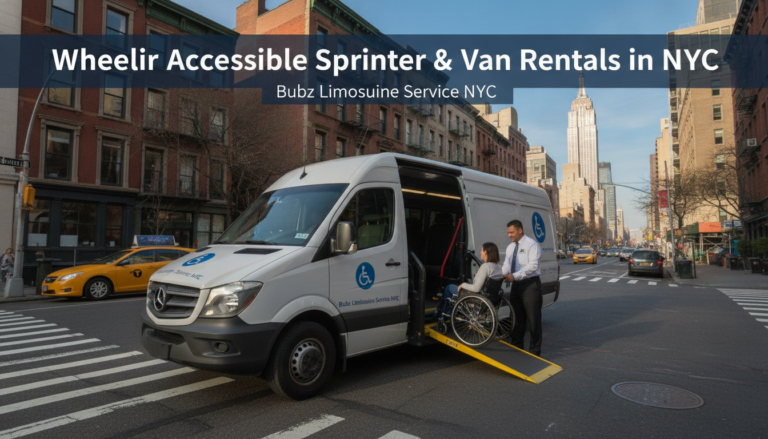 Wheelchair Accessible Sprinter & Van Rentals in NYC
 Wheelchair Accessible Van Rental New York