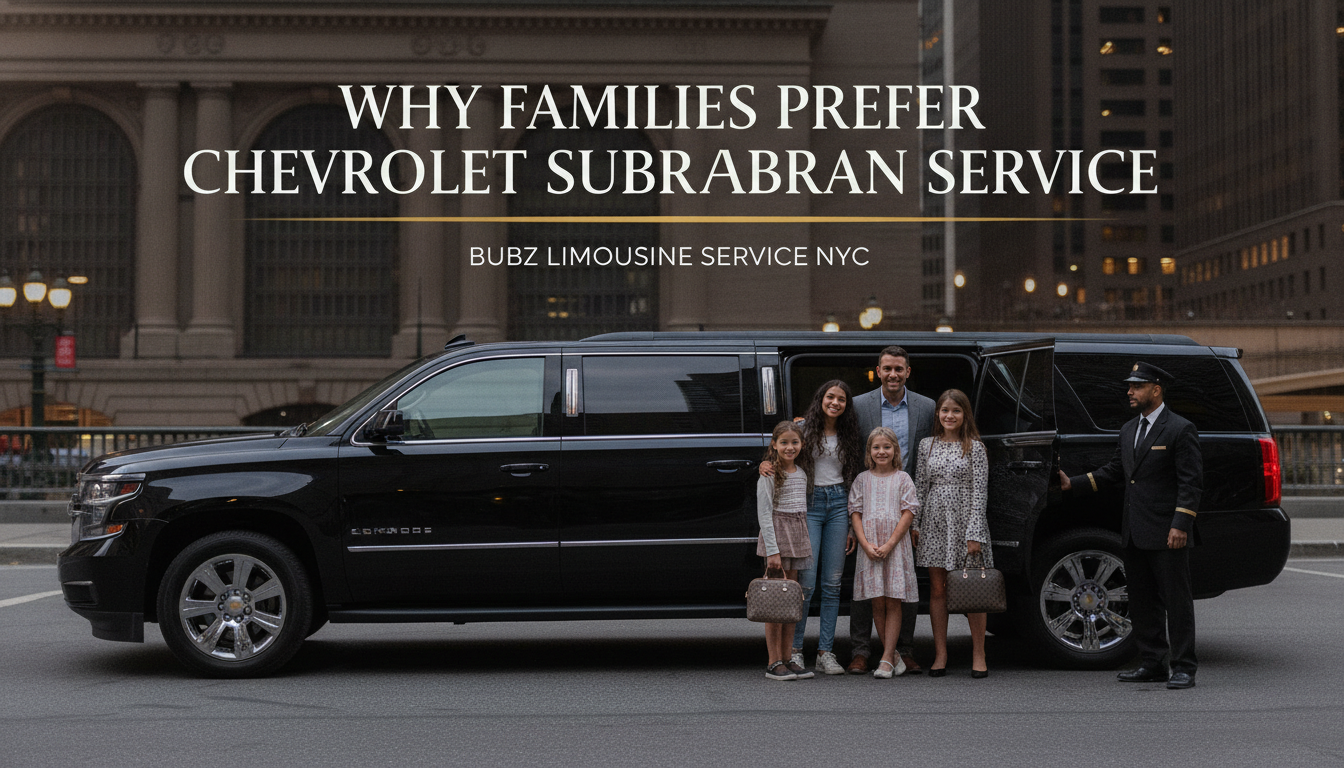
Why Families Prefer Chevrolet Suburban Service
Wheelchair-Accessible Limo and Sprinter Van Service in NYC: What to Expect When You Book
Wheelchair-accessible limousine and Sprinter van service in NYC means a TLC-licensed vehicle equipped for mobility aid loading, driven by a chauffeur trained in assisted boarding, with a confirmed itinerary rather than a hope that the car shows up on time. For anyone navigating New York City with a wheelchair, power scooter, or other mobility device, the difference between a compliant operator and a standard car service isn’t cosmetic — it’s the difference between a smooth ride and a trip that falls apart at the curb.
Bubz Limos operates wheelchair-accessible Sprinter vans and vehicles out of Queens, serving all five boroughs, Long Island, Westchester, and northern New Jersey. This guide walks through how accessible transport actually works in New York, what questions to ask before you book, and how to build a realistic itinerary that accounts for the city’s real logistical challenges.
Why Wheelchair-Accessible Transport in NYC Requires More Planning Than a Standard Car
New York City is not a forgiving environment for mobility devices. Manhattan curbside restrictions mean a vehicle can’t simply stop where it’s convenient — chauffeurs need to know in advance whether a venue has a designated accessible loading zone or whether they’re negotiating with a doorman and a double-parked delivery truck. The same applies to cultural institutions, event venues, medical centers, and restaurants across all five boroughs.
Beyond the curb, the routes matter too. A run from Forest Hills to a Midtown medical appointment during a weekday morning looks very different from the same trip on a Saturday afternoon. The Queens–Midtown Tunnel can add 20 minutes to a journey that looks like 15 minutes on a map, and that extra time is not optional when someone has a dialysis appointment or a pre-op consultation with a hard check-in window.
What “Accessible” Actually Means for the Vehicle
Not every van with a ramp qualifies as properly equipped. A legitimate accessible Sprinter will have a hydraulic or fold-out ramp rated for the combined weight of the passenger and their device, securement points that meet federal ADA transit standards, and sufficient interior clearance for a standard power wheelchair to turn and position correctly. The chauffeur should be trained in operating the ramp and securing the chair — that’s not a skill picked up by watching a YouTube video the morning of a job.
When you call to book, ask specifically whether the vehicle has tie-down securement tracks and whether the chauffeur has hands-on training in their use. A company that pauses at that question is telling you something important.
Wheelchair-Accessible Airport Transfers: JFK, LaGuardia, and Newark
Airport runs for passengers using wheelchairs require coordination that goes well beyond pulling up to departures. For a pickup at JFK, a chauffeur typically stages 45 to 60 minutes ahead of the planned pickup window, with live flight tracking running from the moment the flight departs the origin airport. If the flight lands early, the chauffeur adjusts. If it’s delayed, they’re not sitting at the curb racking up waiting charges — they’re monitoring from an approved staging area and moving when the data says to move.
The Van Wyck to JFK is one of the more predictable stretches in terms of traffic patterns, but “predictable” doesn’t mean fast. A passenger connecting from an international terminal who also needs assistance from a gate agent or an airline wheelchair escort to the vehicle pick-up point needs buffer time built into the plan. That buffer has to be in the written itinerary, not assumed.
Newark EWR: The Interstate Consideration
Newark airport pickups cross state lines, which means the operating vehicle needs to be registered with the FMCSA and carry USDOT authorization for interstate commercial transport. This isn’t bureaucratic fine print — it’s the baseline that separates a compliant operator from one whose insurance won’t respond if something goes wrong on the New Jersey Turnpike. Always verify that an operator carrying passengers to or from Newark holds this registration, and don’t be shy about asking for the USDOT number.
Medical Appointments, Dialysis, and Recurring Trips Across the Boroughs
For passengers with recurring medical appointments — dialysis three times a week, chemotherapy cycles, outpatient therapy — consistency matters as much as accessibility. Knowing the same chauffeur will be there, that the vehicle has been inspected, and that the route has been thought through in advance reduces the cognitive load that falls on patients and their families.
A common trip pattern out of Astoria or Long Island City might involve a 7:30 AM pickup for an 8:30 AM appointment in the Financial District. That timing accounts for the Queens–Midtown Tunnel during the tail end of rush hour, a staged arrival at the medical facility’s accessible entrance, and enough time for the chauffeur to assist with boarding before the appointment clock starts. The itinerary is confirmed in writing in advance, including the return pickup window.
Building the Itinerary: A Worked Scenario
Consider a passenger in Jamaica Estates who uses a power wheelchair and has a 2:00 PM oncology appointment at a hospital in Midtown Manhattan, followed by a return trip home.
-
- 12:45 PM — Chauffeur departs garage, vehicle pre-checked. Ramp function tested, securement tracks clear, climate set.
-
- 1:00 PM — Arrival at Jamaica Estates residence. Chauffeur rings 15 minutes early to confirm the passenger is ready and to allow time for ramp deployment without rushing.
-
- 1:05 PM — Departure. Route via the Van Wyck to the Queens–Midtown Tunnel, accounting for early-afternoon Midtown traffic on a weekday. Total drive time budgeted at 45–55 minutes.
-
- 1:50–2:00 PM — Arrival at accessible hospital entrance. Chauffeur confirms drop-off point with facility staff if needed, assists with disembarking.
-
- Post-appointment — Return window confirmed. Passenger or care coordinator calls when ready; chauffeur stages nearby and returns within the agreed window, not after a 30-minute dispatch scramble.
This kind of itinerary isn’t unusual — it’s the baseline for any trip where timing has real consequences. It requires a written quote, a contract with the itinerary attached, and a direct line to the dispatcher, not a general customer service queue.
Weddings, Proms, and Events with Guests Who Have Mobility Needs
June through October is peak wedding season in New York, and prom season runs through May. Both present coordination challenges when one or more guests in the party require accessible transport. The accessible Sprinter can serve as a dedicated vehicle for guests with mobility aids, running in tandem with a stretch limousine or party bus carrying the rest of the group — all on the same itinerary, all arriving at the same time.
For a wedding with an Astoria ceremony and a Long Island City reception, this kind of parallel coordination is straightforward when it’s planned in advance and logistically complicated when it isn’t. Getting the accessible vehicle into the mix early — during the same conversation where you’re booking the main limousine — is the move that avoids a last-minute scramble three weeks before the date.
What to Confirm Before the Event Day
-
- Whether the ceremony and reception venues have accessible loading zones or require advance coordination with venue staff
-
- The passenger’s specific wheelchair or scooter dimensions and weight, so the operator can confirm the vehicle’s ramp and securement system are compatible
-
- Whether any photo stops are planned — accessible boarding takes slightly longer and those stops need to be in the schedule, not discovered on the day
-
- The full passenger count across all vehicles, so no one is assumed to fit into a vehicle that doesn’t have capacity
-
- Gratuity policy, stated in the contract up front, so there are no awkward conversations at the end of the night
Corporate and Executive Travel with Accessibility Requirements
Corporate travel coordinators and executive assistants booking wheelchair-accessible rides for clients, executives, or conference attendees should treat accessible transport with the same diligence they’d apply to any other executive black car booking — which means a written quote, a named chauffeur or dispatch contact, and confirmation that the vehicle is TLC-licensed and commercially insured.
For a Williamsburg-to-Financial District run for a board member who uses a wheelchair, the calculus is no different than for any other executive transfer: the vehicle needs to be on time, the chauffeur needs to be professional, and the experience needs to be seamless enough that the passenger can focus on the meeting, not the logistics. The accessible Sprinter handles that job. The key is booking it with the same lead time you’d give any executive vehicle, not as an afterthought when you realize the standard sedan won’t work.
TLC Licensing, Insurance, and What They Mean for Passengers
All Bubz Limos vehicles operating in New York City are TLC-licensed, which means they’ve passed the Commission’s vehicle inspection requirements and the chauffeurs hold TLC driver licenses — a credential that requires background checks, drug testing, and ongoing compliance with city regulations. This isn’t a marketing claim; it’s a verifiable status you can look up on the TLC’s public database using the vehicle’s license plate or the driver’s license number.
Commercial liability insurance is the other piece that matters to passengers. In the event of an accident, a commercially insured vehicle has coverage that a personal auto policy — which typically excludes for-hire use — does not. For wheelchair passengers, where an incident during boarding or transit could have serious consequences, that coverage is not optional. Ask for proof of commercial insurance before you book, and if an operator hesitates, look elsewhere.
Frequently Asked Questions About Accessible Limo Service in NYC
How far in advance should I book a wheelchair-accessible vehicle in New York?
For routine medical trips, 48–72 hours is workable if the operator has availability. For weddings, proms, or events during peak season — May through October — book at least four to six weeks out. Accessible vehicles are a smaller subset of any fleet, and availability narrows faster than it does for standard cars. Don’t assume you can add an accessible vehicle to an existing booking the week before the event.
Do you charge for travel time from the garage to my location?
This varies by operator and should be spelled out in your written quote before you confirm. Some operators include a dead-mileage charge for pickup locations outside their primary service area; others build it into the rate. Ask specifically whether the quoted price includes the chauffeur’s drive to your location or whether that’s billed separately. Getting it in writing prevents disagreements after the trip.
What happens if my flight into JFK is delayed and I need the accessible vehicle to wait?
A reputable operator tracks your flight in real time and adjusts the staging window accordingly. You typically will not be charged for delay time caused by the airline up to a stated threshold — what that threshold is should be in your contract. For longer delays, a wait-time rate usually applies. The key is that you should never land and find no one there because the driver left after 20 minutes. Confirm the flight-delay policy in writing before you travel.
Can the accessible Sprinter be part of a multi-vehicle wedding booking?
Yes, and coordinating it as part of a single booking rather than two separate reservations makes logistics significantly cleaner. The dispatcher can align the itineraries, stage all vehicles at the same time, and ensure there’s a single point of contact for the day. If you’re planning a wedding where any guests or members of the wedding party have mobility needs, mention it at the time of your initial inquiry, not after the main vehicles are confirmed.
Is the accessible Sprinter available for out-of-state trips, such as Atlantic City or the Poconos?
Interstate trips require FMCSA/USDOT registration, which applies to commercial vehicles crossing state lines. Confirm this with the operator at the time of booking, and make sure the written contract specifies the full route. Atlantic City runs and Poconos or Catskills group trips are common enough that an experienced operator will have handled them before — but the compliance paperwork needs to be in order regardless of how routine the trip seems.
Planning Your Accessible Trip with Bubz Limos
Accessible transport in New York City works when it’s planned rather than improvised. That means a vehicle matched to the passenger’s actual equipment, a chauffeur trained in its use, a written itinerary that accounts for real New York travel times, and an operator whose TLC licensing and commercial insurance you can verify. Whether the trip is a JFK airport pickup, a recurring dialysis run from Forest Hills, or an accessible vehicle coordinated into a wedding day across Queens and Manhattan, the process starts with a direct conversation and a written quote.
To get a quote or ask questions about wheelchair-accessible Sprinter service, reach Bubz Limos at book@bubzlimos.com or call +1 (929) 541-5558. Give the dispatcher the details — passenger dimensions, device type, trip date, pickup and drop-off locations — and you’ll get straight answers about what’s available and what it costs.
Related Posts
 Luxury Airport Transfers for Families
 Black Car and SUV Service Across NYC
 Luxury SUV Service in NYC: Escalade, Suburban & Navigator Options
 Escalade Car Service – Bubz Limos NYC
 Explore NYC in Comfort with the Chevrolet Suburban 23 and Bubz Limos NYC
 Experience Luxury Travel: Why the Chevrolet Suburban is the Ultimate Choice for Bubz Limos in NYC
 NYC Airport Transfer with Luxury Sedan
 Ride in Luxury: The Best NYC Limousine Services for Business and Pleasure