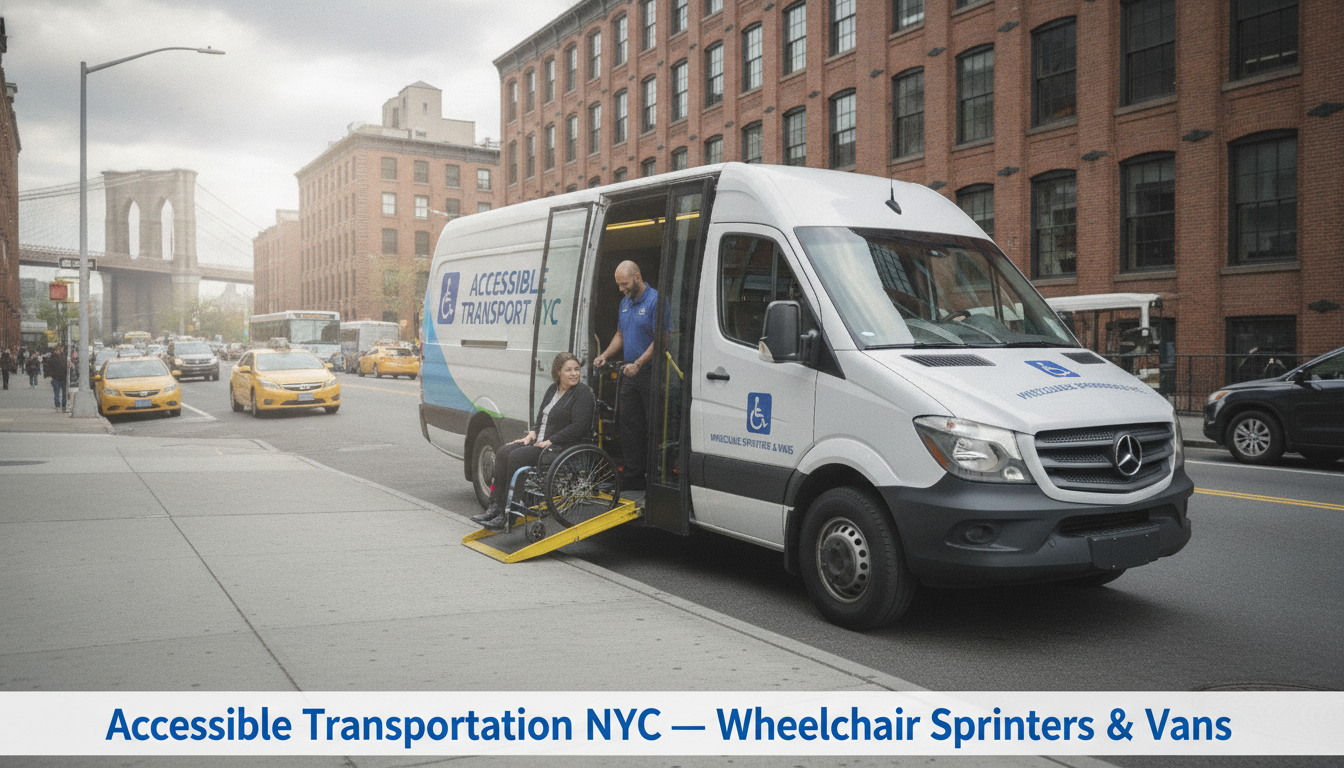
Accessible Transportation NYC — Wheelchair Sprinters & Vans
Getting Around NYC Shouldn’t Come With Barriers
New York City is one of the most dynamic, fast-moving cities in the world — but for wheelchair users and people with mobility challenges, navigating it can feel like an uphill battle. Subway elevators break down with frustrating regularity, standard taxis aren’t built for accessibility, and rideshare options often fall short when a wheelchair is involved. That’s where accessible transportation NYC services — specifically wheelchair-accessible Sprinter vans and larger mobility vans — make a real, practical difference.
This guide is written for anyone who needs reliable, dignified, and comfortable transport in New York City. Whether you’re a caregiver coordinating medical appointments, a traveler arriving at JFK with a power wheelchair, or a family planning a day out, understanding your options puts you in control.
Why Standard Transport Options Often Fall Short
The MTA deserves credit for its ongoing accessibility improvements, but the reality on the ground is inconsistent. As of recent years, only around 30% of New York City subway stations are fully ADA accessible — and even those face frequent elevator outages. For wheelchair users, a single broken elevator can derail an entire journey.
Traditional yellow cabs are legally required to include accessible vehicles in their fleets, but availability is unpredictable, especially during peak hours or in outer boroughs. Rideshare apps like Uber and Lyft offer WAV (wheelchair-accessible vehicle) options, but drivers with accessible vehicles are scarce, and wait times can stretch to an hour or more in many neighborhoods.
That gap — between what people need and what the standard transport network actually delivers — is exactly what dedicated accessible van services are designed to fill.
The Problem With “Close Enough”
Accessibility isn’t a sliding scale. A vehicle that’s technically large enough to fold down a manual chair but can’t accommodate a power wheelchair isn’t accessible — it’s just less inconvenient. People who rely on mobility equipment need vehicles with proper ramps, securement systems, and space built around their actual needs.
Sprinter vans and full-size accessible vans, when properly outfitted, solve these problems by design rather than as an afterthought.
What Makes a Wheelchair-Accessible Sprinter Van Different
Mercedes-Benz Sprinter vans have become a gold standard in the accessible transportation industry — and not by accident. Their tall roof height (often exceeding 6 feet of interior clearance), long wheelbase, and load capacity make them an ideal platform for accessibility conversions.
When properly converted for wheelchair use, a Sprinter typically includes:
- A rear- or side-entry hydraulic or fold-out ramp
- WC19-compliant wheelchair tie-down and occupant restraint systems (WTORS)
- Reinforced flooring with track systems for flexible chair positioning
- Climate control throughout the passenger area
- Ample headroom for users who remain seated in their chairs during transit
The WC19 standard, developed by the University of Michigan Transportation Research Institute, is the benchmark for wheelchair crash protection in transit vehicles. Reputable providers outfit their vehicles to meet or exceed this standard — it’s worth asking any provider directly whether their securement systems comply.
Sprinter vs. Full-Size Accessible Van: Which Is Right for You?
Sprinters are ideal for individual or small-group transport — typically up to 2 wheelchair positions with additional ambulatory seating. They’re maneuverable enough for Manhattan streets while still offering serious carrying capacity.
Full-size accessible vans (often built on Ford Transit or Ram ProMaster platforms) are better suited for group outings, facility transfers, or situations where multiple wheelchair users are traveling together. If you’re coordinating transport for a school trip, medical group, or adult day program, a larger van configuration may be the more practical choice.
Accessible Transportation NYC: Real-World Use Cases
It helps to think about accessible van services not as a niche offering, but as a practical tool across a wide range of situations. Here’s how people in New York actually use them:
Airport Transfers
Arriving at JFK, LaGuardia, or Newark with a power wheelchair and luggage is a logistical puzzle. AirTrain stations have elevators, but they’re not always operational, and the connection from terminal to accessible ground transport isn’t always smooth. Booking a dedicated accessible Sprinter for airport pickup eliminates the variables — the vehicle meets you curbside, your chair is secured properly, and there’s room for travel companions and bags.
Medical Appointments and Non-Emergency Medical Transport
This is one of the highest-demand use cases in New York City. Patients traveling to hospitals like NYU Langone, Mount Sinai, or Memorial Sloan Kettering often need reliable, on-time transport — not a vehicle that might arrive 45 minutes late or cancel at the last moment. A pre-booked accessible van with a trained driver provides the predictability that medical scheduling demands.
Special Events and Social Outings
Broadway shows, family gatherings, sports events at Madison Square Garden, or a simple dinner in a neighborhood you haven’t visited in years — these moments matter. Accessible van services make it possible to participate fully without the stress of working around transit limitations.
School and Program Transport
For families with children who use wheelchairs, and for adult day programs or senior centers, reliable group transport is essential to quality of life. An accessible Sprinter or van that arrives on time, every time, makes the difference between participation and isolation.
What to Look for When Booking an Accessible Van Service in NYC
Not all accessible transportation services are equal. Here’s what to evaluate before you book:
Vehicle Standards and Certification
Ask whether the vehicles have been professionally converted by a certified mobility equipment dealer. In the U.S., the National Mobility Equipment Dealers Association (NMEDA) sets quality standards for vehicle conversions. Look for providers who can speak clearly about their equipment and conversion standards.
Driver Training
Securing a wheelchair correctly isn’t intuitive — it requires specific training. Drivers should be trained in proper use of tie-down systems, passenger assistance, and emergency procedures. Some providers also carry CPR certification or have experience working with passengers who have complex medical needs.
Licensing and Insurance
In New York, vehicles providing for-hire transportation must be properly licensed through the Taxi and Limousine Commission (TLC). This isn’t a bureaucratic detail — it’s a meaningful consumer protection. TLC-licensed operators are subject to vehicle inspections, driver background checks, and insurance requirements that unregistered services are not.
Booking Flexibility
Life doesn’t always run on a fixed schedule. Look for services that offer both advance reservations and responsive booking for same-day or short-notice needs. Clear cancellation policies and direct contact with the provider (not just an app interface) are signs of a serious, service-oriented operation.
Communication and Transparency
A reliable provider should be able to tell you exactly what type of vehicle will arrive, what ramp system it uses, how many wheelchair positions are available, and what the process looks like from pickup to drop-off. Vague answers to direct questions about equipment or process are a red flag.
Navigating New York City in an Accessible Van: Practical Tips
Even with the right vehicle booked, a little preparation goes a long way in NYC.
- Book with extra time buffer. New York traffic is unpredictable. If your appointment is at 10am, don’t book pickup for 9:45. Build in 20–30 minutes of cushion, especially for cross-borough trips.
- Confirm pickup location specifics. Many hospitals and venues have designated accessible pickup/drop-off zones that differ from the main entrance. Confirm the exact pickup point with both your provider and the venue in advance.
- Communicate your equipment needs clearly. Power wheelchairs vary significantly in size and weight. Share your chair’s dimensions and weight with your provider when booking so they can confirm the right vehicle.
- Plan for borough differences. Getting from the Bronx to Brooklyn takes very different planning than a trip within Manhattan. Allow more time and confirm route familiarity with your driver or dispatcher.
Frequently Asked Questions
What types of wheelchairs can accessible Sprinter vans accommodate?
Most properly converted Sprinter vans can accommodate manual wheelchairs, power wheelchairs, and mobility scooters. However, bariatric wheelchairs or unusually large power chairs may require confirmation of specific weight and dimension limits before booking. Always share your chair’s measurements and weight with the provider upfront — a good service will ask for this information as standard practice.
How far in advance should I book accessible transportation in NYC?
For medical appointments or airport transfers, booking 24–48 hours in advance is ideal. For peak travel times — holidays, early morning airport runs, or large events — booking several days ahead gives you more flexibility and ensures vehicle availability. Most providers will also accommodate same-day bookings where possible, though availability isn’t guaranteed.
Is accessible van transportation covered by insurance or Medicaid?
In some cases, yes. Non-emergency medical transportation (NEMT) is a Medicaid-covered benefit in New York State for eligible individuals traveling to medical appointments. Coverage depends on your specific plan and the nature of the trip. It’s worth contacting your Medicaid managed care plan directly to understand what’s covered and which providers are in-network.
How do I know if a provider is legitimate and safe?
Look for TLC licensing, verifiable driver background checks, and clear communication about vehicle standards. Legitimate providers will be transparent about their certifications, insurance, and equipment. Reviews from other wheelchair users — on Google, community forums, or disability advocacy groups — can also provide genuine insight into service quality.
Can I bring a caregiver or companion in the same vehicle?
Yes, in most cases. Sprinter vans designed for accessible transport typically include additional ambulatory seating alongside wheelchair positions, so a caregiver, family member, or companion can ride along without needing a separate vehicle. Confirm the total passenger count when booking so the provider can plan accordingly.
The Bigger Picture: Accessible Transport as a Quality-of-Life Issue
It’s easy to talk about accessible transportation in logistical terms — vehicles, ramps, tie-downs. But at its core, this is a quality-of-life issue. The ability to get to a doctor’s appointment on time, attend a family celebration, or simply move through the city with confidence affects independence, wellbeing, and dignity.
New York is a city built on movement. Accessible transportation services — when done right — are what make that movement possible for everyone, regardless of mobility status. The gap between the city’s ambitions and its infrastructure is real, but dedicated accessible van services represent one of the most practical ways to bridge it right now.
Choosing a provider that takes this responsibility seriously — with properly equipped vehicles, trained drivers, and a genuine commitment to the people they serve — isn’t just a logistical decision. It’s a standard worth holding high.
Ready to Book Accessible Transportation in NYC?
Whether you’re planning an airport pickup, a medical appointment run, or a special outing in the city, the right vehicle and the right team make all the difference. If you have questions about which vehicle suits your needs, want to confirm equipment specs, or you’re ready to make a booking, we’re here to help.
Reach out to our team directly — email us at book@bubzlimos.com or call +1 (929) 541-5558. We’ll walk you through your options, answer any questions about accessibility requirements, and make sure everything is arranged exactly as you need it.
Related Posts
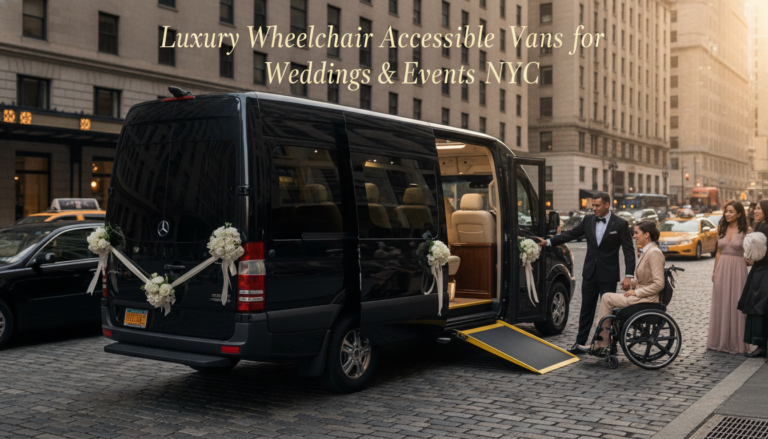 Luxury Wheelchair Accessible Vans for Weddings & Events NYC
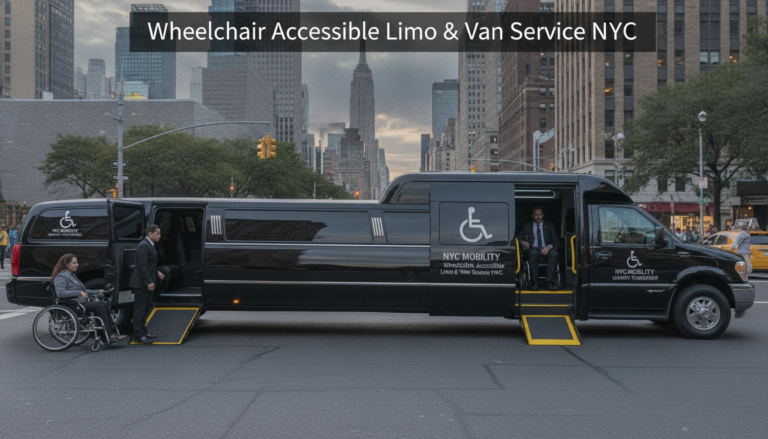 Wheelchair Accessible Limo & Van Service NYC
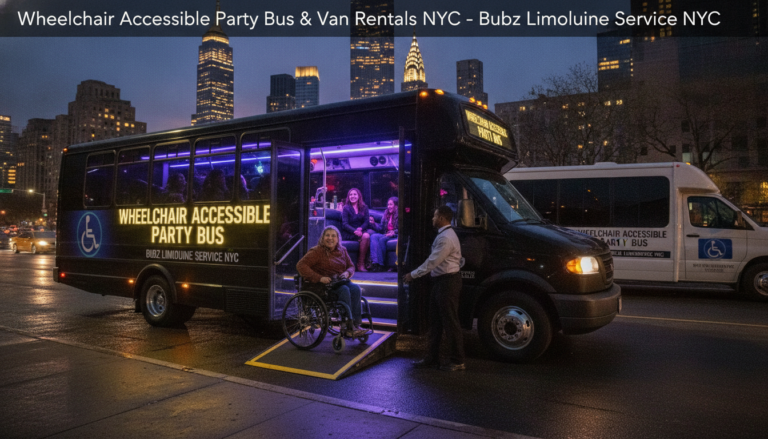 Wheelchair Accessible Party Bus & Van Rentals NYC
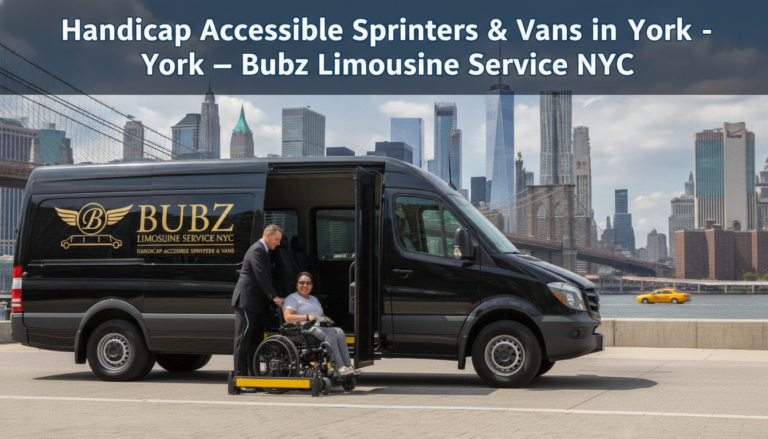 Handicap Accessible Sprinters & Vans in New York
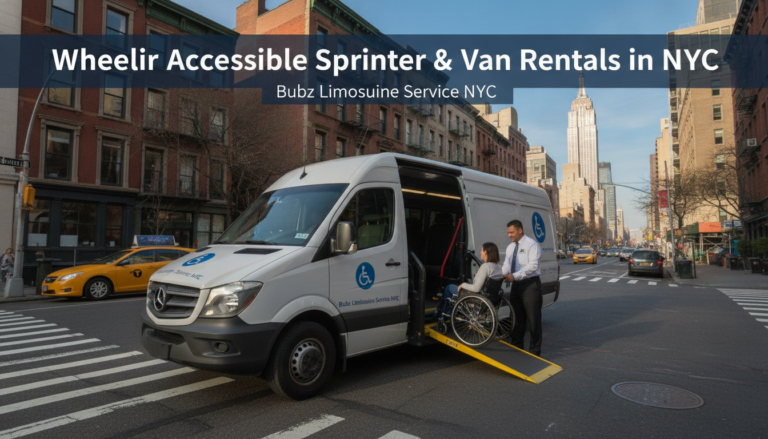 Wheelchair Accessible Sprinter & Van Rentals in NYC
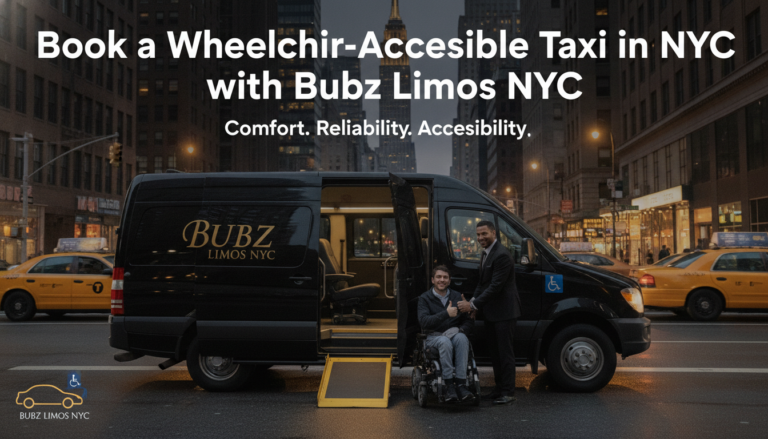 Book a Wheelchair-Accessible Taxi in NYC with Bubz Limos NYC
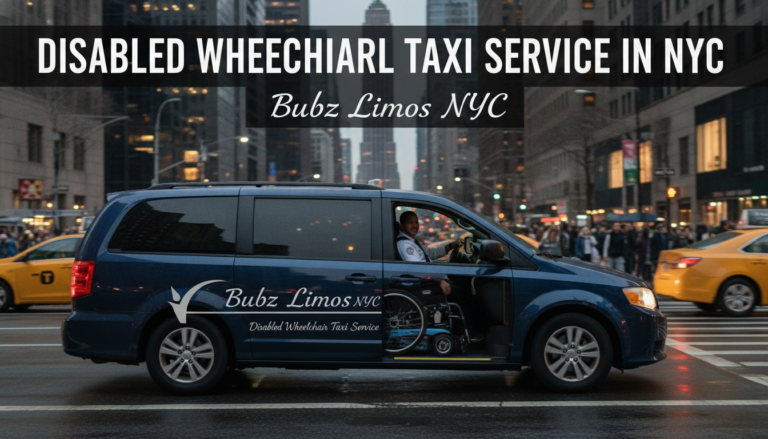 Disabled Wheelchair Taxi Service in NYC
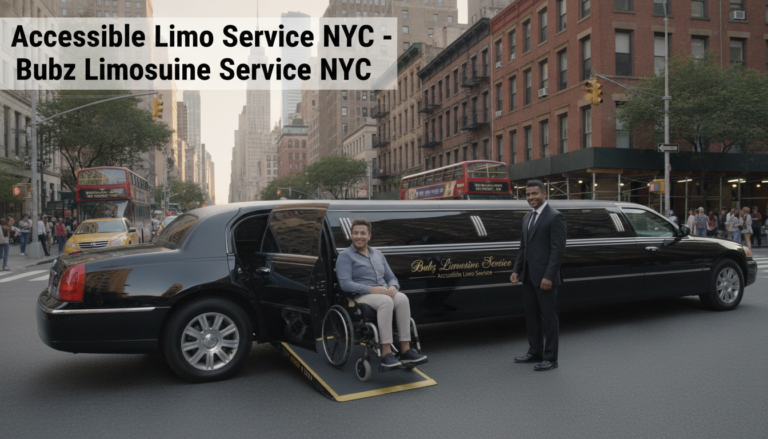 Accessible Limo Service NYC – Bubz Limousine Service NYC