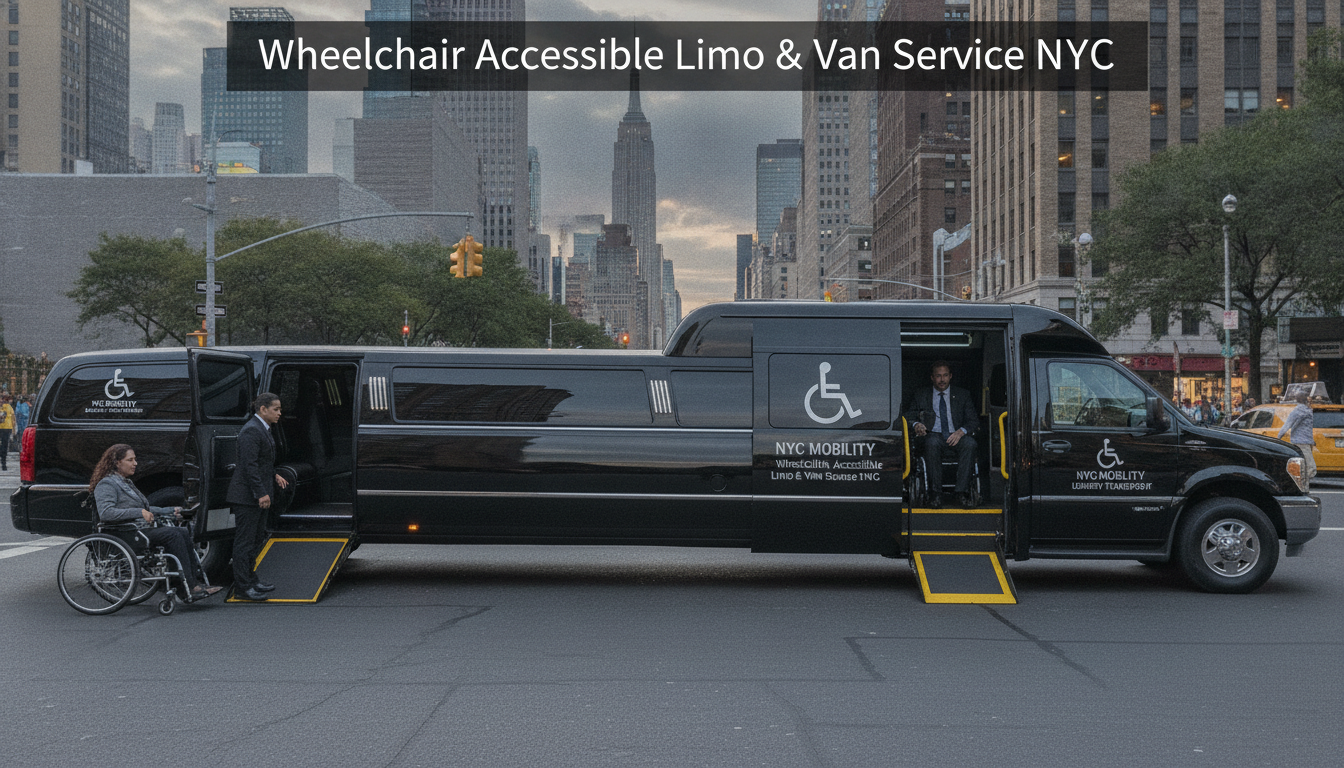
Wheelchair Accessible Limo & Van Service NYC
Getting Around NYC Without Barriers: Why Wheelchair Accessible Limo & Van Service Matters
New York City is one of the most exciting places in the world — but for wheelchair users and people with mobility challenges, navigating it can be genuinely exhausting. Between subway stations that lack working elevators, taxis that pass you by, and rideshare apps with unpredictable vehicle availability, transportation becomes a daily obstacle rather than a simple convenience.
That’s where wheelchair accessible limo and van service in NYC steps in to change the equation. Rather than cobbling together unreliable options, a dedicated accessible vehicle service offers comfort, dignity, and genuine peace of mind — whether you’re heading to a medical appointment in Midtown, catching a flight at JFK, or celebrating a milestone with family.
This guide covers everything you need to know: how these services work, what to look for, who benefits most, and how to make the experience as smooth as possible.
What Wheelchair Accessible Limo & Van Service in NYC Actually Includes
The term “wheelchair accessible” can mean different things depending on who’s using it. In the context of professional limo and van service, it refers to vehicles that have been purpose-modified or purpose-built to safely transport passengers who use manual or power wheelchairs, scooters, or other mobility devices.
Key Features of a Properly Equipped Accessible Vehicle
- Hydraulic or electro-hydraulic ramps or lifts — these allow passengers to board without needing to transfer out of their chair
- Tie-down and securement systems — four-point anchor systems hold the wheelchair safely in place during transit
- Lowered floors or raised rooflines — providing adequate headroom, especially for power chair users
- Wide sliding doors — typically 32 inches or more to accommodate standard and extra-wide chairs
- Interior grab rails and non-slip flooring — for passengers who may transfer or need additional stability
A well-maintained accessible van or limo isn’t just modified — it’s regularly inspected to ensure every safety feature functions correctly. Reputable NYC providers operate under TLC (Taxi and Limousine Commission) licensing requirements, which include vehicle inspections and driver background checks.
The Difference Between a Van and a Limo Setup
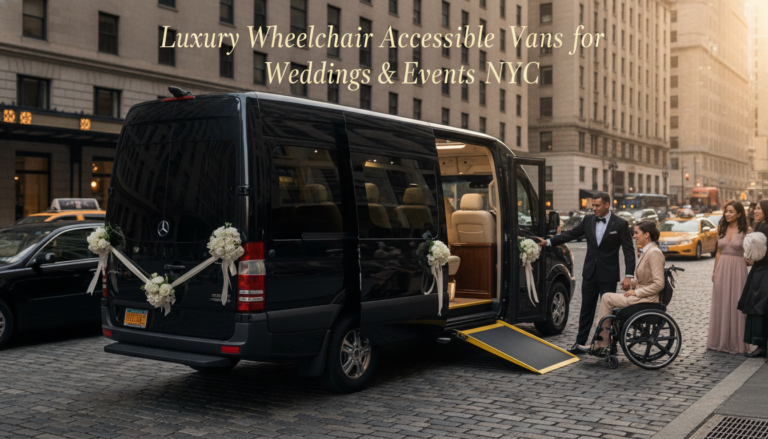
Accessible vans are the most common format, typically seating four to six ambulatory passengers alongside one or two wheelchair positions. Accessible limo configurations tend to offer a more premium feel — think leather interiors, climate control, and additional legroom — while still including all necessary mobility accommodations.
For corporate travel, airport transfers, or special occasions, the limo setup elevates the experience without sacrificing accessibility. For medical transport or everyday errands, a clean and comfortable van is often the practical choice.
Who Uses Wheelchair Accessible Limo & Van Services in New York City?
It would be easy to assume this is a niche service, but the reality is much broader. According to the U.S. Census Bureau, roughly 13% of Americans live with some form of disability, and mobility-related disabilities are among the most common. In a city of over 8 million people like New York, that translates to hundreds of thousands of residents who need reliable, accessible transportation.
Common Passengers and Scenarios
Medical appointments and hospital transfers: This is one of the most frequent use cases. Getting to and from hospitals, dialysis centers, rehabilitation facilities, or specialist clinics requires punctuality and comfort — two things standard cabs can’t always guarantee.
Airport transfers: JFK, LaGuardia, and Newark all present accessibility challenges. Long walks, heavy luggage, and tight connections make private accessible transport far preferable to navigating airport shuttle systems.
Special occasions: Weddings, graduations, anniversary dinners, Broadway shows — wheelchair users deserve to arrive in style just like anyone else. Accessible limo service makes that possible without compromise.
Corporate and business travel: Executives, consultants, and business travelers with mobility needs often require the same professionalism and reliability they’d expect from any executive car service.
Elderly passengers: Not everyone who uses an accessible vehicle uses a wheelchair. Many older adults benefit from step-in vans with grab handles and patient drivers who allow time for boarding at a comfortable pace.
Navigating NYC: Why Standard Options Fall Short
New York’s subway system is often celebrated as one of the world’s great transit networks — and it is, for most riders. But only about 25% of subway stations are ADA-accessible, and even those frequently have out-of-service elevators. The MTA’s own data shows that elevator outages are a persistent problem, leaving wheelchair users stranded mid-journey.
Yellow taxis are required by law to accept passengers with folding wheelchairs, but power chairs are another story. Many drivers are unfamiliar with securement procedures, and refusing a passenger remains an unfortunately common experience.
Rideshare apps like Uber and Lyft do offer WAV (wheelchair accessible vehicle) options in NYC, but availability is inconsistent, wait times can stretch beyond 30 minutes, and the drivers — often operating independently — may not have the training to assist passengers safely.
A dedicated wheelchair accessible limo and van service solves these problems directly. Scheduled bookings, trained drivers, guaranteed vehicle types, and door-to-door service make a meaningful difference in both reliability and dignity.
What to Look for When Choosing an Accessible Transportation Provider
Not all accessible transport services are created equal. Here’s how to evaluate your options before booking.
Licensing and Compliance
In New York City, any for-hire vehicle service must be licensed by the Taxi and Limousine Commission (TLC). This includes background checks for drivers, vehicle inspections, and insurance requirements. Always confirm that your provider holds current TLC licensing — it’s a basic but essential starting point.
Driver Training
Vehicle modifications only go so far. A trained driver knows how to operate a ramp or lift properly, how to secure a wheelchair using a four-point tie-down system, and how to assist passengers without being intrusive or causing injury. Ask providers directly about their driver training protocols before committing.
Vehicle Condition and Age
Ramps, lifts, and tie-down systems require regular maintenance. An older vehicle with worn securement straps or a sluggish lift is both a safety concern and a frustrating experience. Ask how frequently vehicles are inspected and whether they carry backup vehicles in case of mechanical issues on the day of your trip.
Booking Flexibility
Can you book in advance for a specific time? Is there a way to request the same driver for recurring trips? Does the provider accommodate last-minute changes or cancellations? For passengers managing ongoing medical schedules or time-sensitive events, these logistical details matter enormously.
Communication and Transparency
A good provider will give you a clear confirmation with driver details, vehicle type, and estimated arrival time. They’ll also have a direct line you can call if something changes — not just a generic customer service queue.
Planning Your Accessible Trip: Practical Tips
Even with a great provider, a little preparation on your end goes a long way toward making the experience seamless.
- Book at least 24–48 hours in advance for non-urgent trips. For airport transfers, 72 hours ahead is a comfortable buffer, especially during busy travel periods.
- Specify your chair type at the time of booking — manual, power, bariatric, or scooter. This helps the provider confirm the right vehicle is assigned.
- Share your exact pickup address, including any building entry details, steps, or access notes that might affect how the driver approaches your location.
- For airport trips, provide your flight number so the driver can monitor delays and adjust arrival accordingly.
- Ask about companion seating if you’re traveling with a carer, family member, or friend. Most accessible vans can accommodate two to four additional passengers alongside the wheelchair user.
If you have a recurring appointment — say, weekly dialysis or bi-weekly physical therapy — ask about standing bookings or account arrangements. Many providers offer preferred scheduling for repeat clients, which eliminates the need to re-book every time.
The Experience of Traveling with a Quality Accessible Limo Service
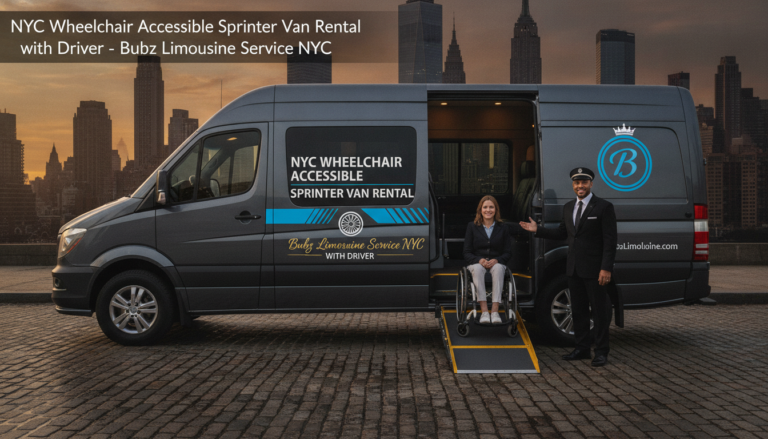
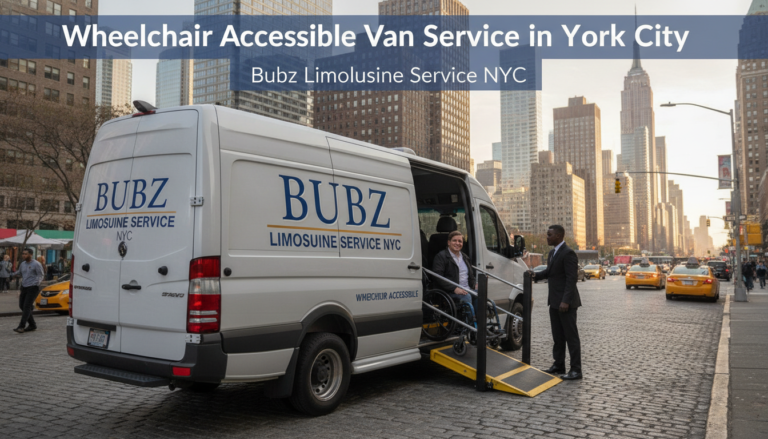
Here’s what a smooth booking looks like in practice. You call or email the night before your appointment. You confirm your pickup time, give your address and chair type, and get a confirmation with the driver’s name. The next morning, the van arrives on time. The driver greets you, lowers the ramp or operates the lift, assists with boarding if needed, and secures your chair using the proper anchor system. You’re comfortable, you’re safe, and you arrive at your destination on time without the stress of wondering whether you’ll even get a vehicle.
That experience — which sounds simple — is actually a significant upgrade for many wheelchair users in New York City who are used to cancellations, inaccessible vehicles, or drivers who don’t know how to operate their own equipment.
It’s also a matter of dignity. Being able to travel independently, reliably, and comfortably is something most people take for granted. A high-quality accessible service makes that the default, not the exception.
Frequently Asked Questions
What types of wheelchairs can be accommodated?
Most professional accessible van and limo services in NYC can accommodate manual wheelchairs, power wheelchairs, and mobility scooters. Bariatric chairs may require a larger vehicle, so it’s always worth specifying your chair type and dimensions when you book. A good provider will confirm whether their available vehicles are suited to your needs before confirming the reservation.
How far in advance should I book a wheelchair accessible limo or van in NYC?
For routine trips, 24 to 48 hours in advance is generally sufficient. For airport transfers, special events, or trips during peak times (holidays, major events), booking 72 hours or more ahead gives you the most flexibility. Same-day bookings may be possible depending on availability, but advance scheduling is always more reliable.
Is the service available for trips outside Manhattan?
Yes — reputable accessible transport providers in NYC typically cover all five boroughs as well as airport routes to JFK, LaGuardia, and Newark. Some also offer longer-distance trips to upstate New York, New Jersey, or Connecticut. Confirm your destination when booking to ensure coverage and get an accurate quote.
Are the drivers trained to assist passengers with disabilities?
Professional accessible transport services train their drivers specifically to operate ramps and lifts, secure wheelchairs using four-point tie-down systems, and assist passengers with boarding and disembarking safely. This training goes beyond what you’d typically find with standard rideshare or taxi drivers. When evaluating a provider, it’s reasonable to ask directly about their driver training and certification process.
How is pricing structured for accessible van and limo service in NYC?
Pricing varies depending on distance, vehicle type, and any additional services like wait time or extra stops. Most providers offer flat-rate quotes for airport transfers, which helps with budgeting. Medical transport may be partially covered by Medicaid or private insurance in some cases — it’s worth checking your coverage before assuming full out-of-pocket cost. Always request a quote upfront so there are no surprises at the end of the trip.
Conclusion: Accessible Transportation Is a Right, Not a Luxury
Wheelchair accessible limo and van service in NYC isn’t about special treatment — it’s about equal access to the city. Every New Yorker should be able to get to a doctor’s appointment on time, catch a flight without stress, or arrive at a celebration feeling good. For wheelchair users and people with mobility challenges, a professional accessible transport service makes that possible in a way that no other option consistently delivers.
When you choose a provider that’s licensed, well-equipped, and genuinely trained to serve passengers with disabilities, the difference is immediate and obvious. It’s one less thing to worry about in a city that already demands so much from you every day. Whether you’re booking for yourself, arranging transport for a family member, or coordinating ongoing medical appointments, the right accessible service is out there — and it’s worth taking the time to find it.
Ready to book or have questions about wheelchair accessible limo and van service in NYC? Get in touch with our team — email us at book@bubzlimos.com or call +1 (929) 541-5558. We’re happy to help you find the right vehicle, answer any questions about accessibility, or provide a no-obligation quote for your upcoming trip.
Related Posts
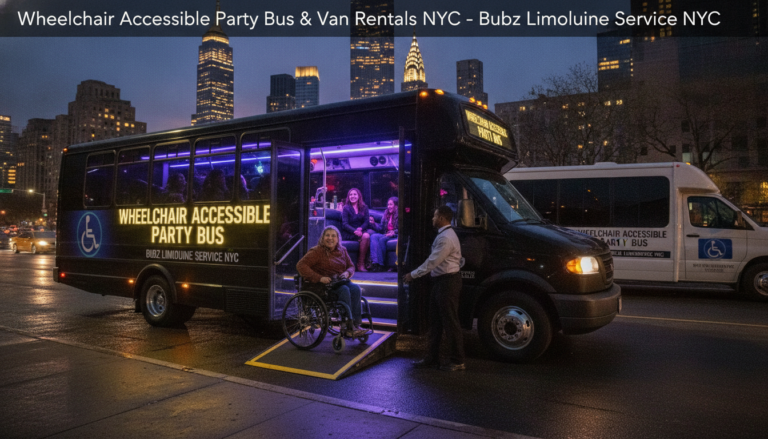 Wheelchair Accessible Party Bus & Van Rentals NYC
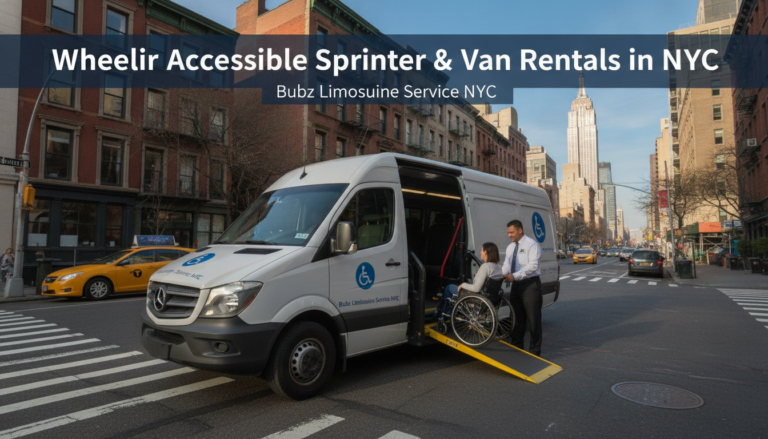 Wheelchair Accessible Sprinter & Van Rentals in NYC
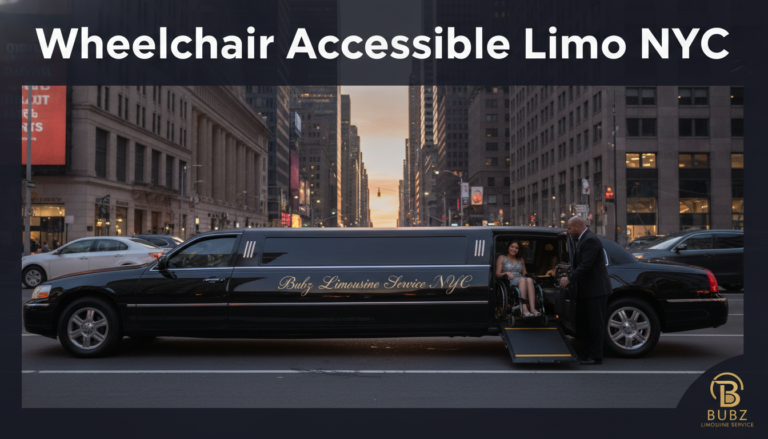 Wheelchair Accessible Limo NYC – Bubz Limousine Service NYC
 Luxury Wheelchair Accessible Vans for Weddings & Events NYC
 ADA Compliant Van & Sprinter Rentals — Queens & NYC
 NYC Wheelchair Accessible Sprinter Van Rental with Driver
 Wheelchair Accessible Van Service in New York City
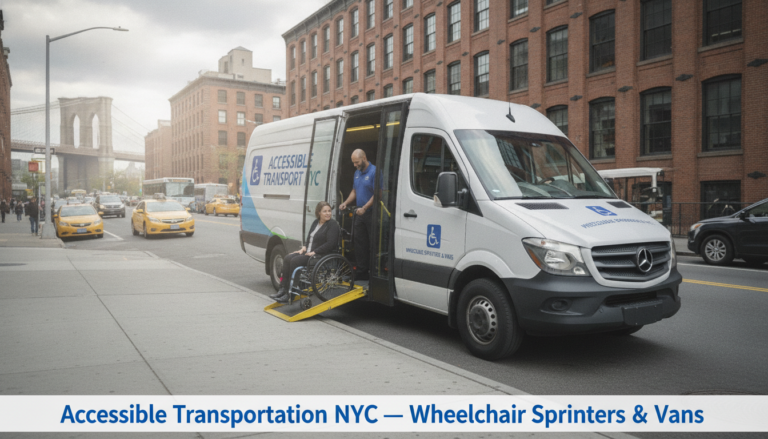 Accessible Transportation NYC — Wheelchair Sprinters & Vans