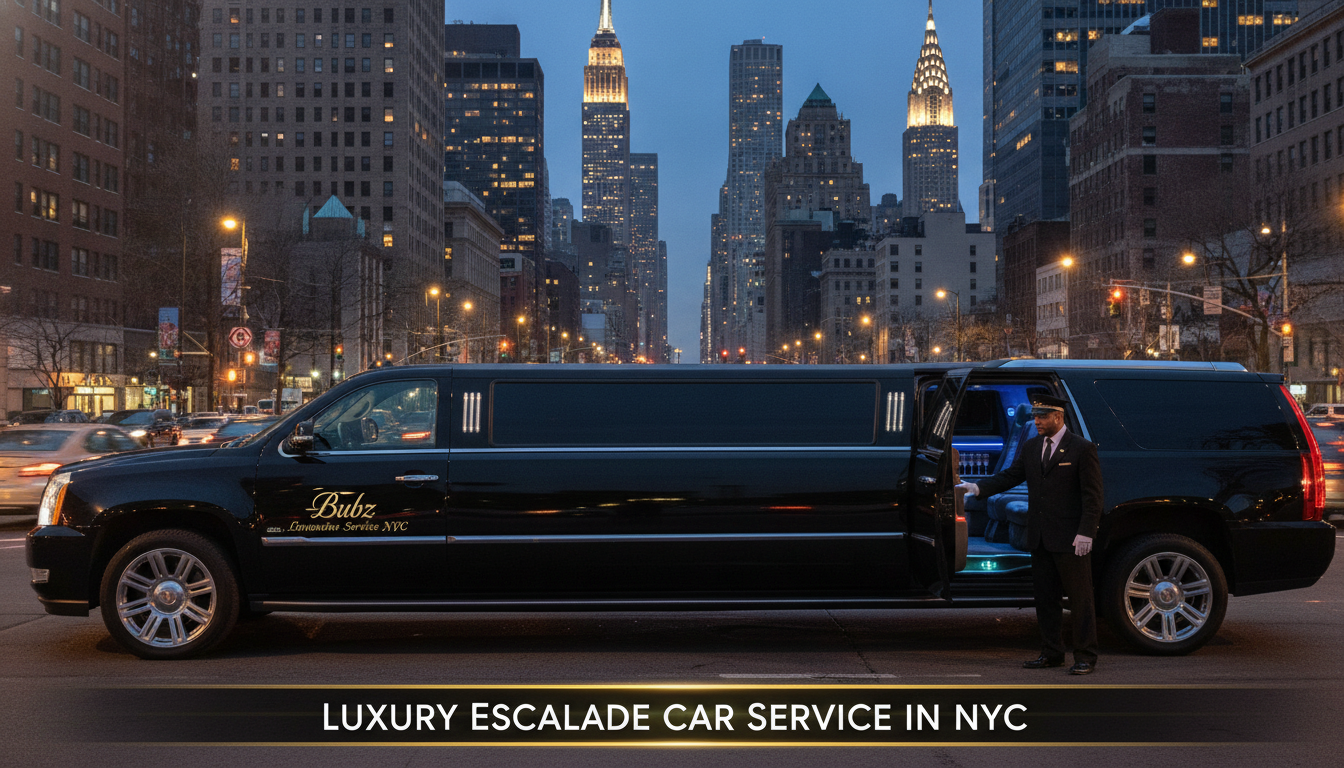
Luxury Escalade Car Service in NYC
Wheelchair-Accessible Limo and Van Service in NYC: What to Know Before You Book
Wheelchair-accessible transportation in New York City that is also genuinely comfortable, reliable, and professionally operated is harder to find than it should be. Bubz Limos offers wheelchair-accessible Sprinter and van service covering all five boroughs, Long Island, Westchester, and northern New Jersey — vehicles staffed by TLC-licensed chauffeurs, covered by commercial liability insurance, and booked with a written contract so every detail is confirmed before the day arrives.
If you are planning a medical appointment in Midtown, a family wedding run from Astoria to a Manhattan venue, a JFK airport transfer, or a group trip to a Long Island vineyard, this guide covers how accessible limo and van service in NYC actually works, what to verify before you hand over a deposit, and how to build a timeline that accounts for real New York traffic patterns.
Why Accessible Vehicle Booking in New York Requires Extra Diligence
New York‘s for-hire vehicle industry is large and fragmented. Not every company that lists “wheelchair accessible” on its website has fully compliant ramp or lift equipment, properly trained drivers, or vehicles inspected to the standard the NYC Taxi & Limousine Commission requires. Booking a TLC-licensed operator matters because every vehicle in a licensed fleet must pass TLC inspections, and every chauffeur must hold a TLC driver’s license — which requires a background check, drug testing, and defensive driving certification that a standard driver’s license does not.
For interstate trips — Atlantic City runs, Poconos weekends, trips up to the Hudson Valley or Catskills — the operator also needs FMCSA/USDOT registration. That registration signals that the company carries commercial insurance at the federal minimum threshold required for vehicles crossing state lines, which matters if something goes wrong far from home. Always ask for the USDOT number and verify it on the FMCSA website before you book a group trip out of New York.
What “Accessible” Actually Means in a Fleet Vehicle
The word accessible covers a spectrum. A vehicle might have a fold-out ramp or a powered lift; it might secure one wheelchair or several; it might have tie-down systems rated for a power chair or only a manual folding chair. Before confirming a booking, describe the specific chair or mobility device — dimensions, weight, whether it is a power wheelchair or a transport chair — so the right vehicle is assigned and the driver arrives prepared.
Bubz Limos‘ accessible Sprinter and van options are built for real-world use: routes that include curb approaches in Forest Hills, tight drop-off zones on crowded Manhattan blocks, and the kind of timed coordination a wedding or airport run demands. A driver who handles accessible transport regularly knows the difference between a venue entrance that works on paper and one that actually accommodates a ramp deployment safely.
How a Wheelchair-Accessible NYC Transfer Is Built Around Real Timing
Here is how a typical accessible airport transfer from Queens to JFK gets structured in practice. The process is the same whether the vehicle is a standard black car or a Sprinter — the accessible run just requires a few extra minutes built in at each end.
- Flight confirmation the evening before. The dispatcher checks the flight time and sets a pickup window. For a domestic departure out of JFK, the standard buffer is 45–60 minutes before the usual recommended arrival time, accounting for Van Wyck Expressway congestion, which can be unpredictable even outside peak hours.
- Chauffeur staged early. The driver arrives at the pickup address — say, a residence in Jamaica Estates — 15 minutes before the scheduled pickup, not at the scheduled pickup time. That cushion exists to account for elevator waits, loading a power chair, and securing tie-downs properly before moving.
- Route selected based on time of day. Morning departures before 7 a.m. typically move well on the Van Wyck. A 9 a.m. pickup heading to a noon flight is a different calculation — the dispatcher may flag the need for a slightly earlier departure to avoid the merge at the Belt Parkway interchange.
- Drop-off coordination at the terminal. Manhattan curbside restrictions are a factor at JFK too. Some terminals have stricter accessible vehicle staging than others. A driver who knows the terminals parks or stages in the correct zone rather than forcing a passenger to navigate an unfamiliar curb approach.
- Return pickup with live flight tracking. On inbound flights, the chauffeur monitors the actual arrival, not the scheduled one. If a flight from Chicago is delayed 40 minutes, the driver adjusts rather than staging at the terminal an hour early — and the passenger is not standing at baggage claim wondering if the car is there.
A Worked Scenario: Wedding Day Accessible Transfer from Astoria
Consider a family coordinating a wedding in Midtown Manhattan. The grandmother of the bride uses a power wheelchair and is coming from an apartment in Astoria. The ceremony starts at 6 p.m. at a venue near Fifth Avenue, and the family wants her there before the bridal party arrives so there is no rush at the entrance.
Working backwards from a 5:30 p.m. venue arrival: the Astoria pickup is set for 4:15 p.m. That gives 75 minutes for a route that, on a Saturday afternoon, will likely use the Queens–Midtown Tunnel rather than the BQE, which on summer weekends can back up significantly between Long Island City and the Brooklyn-Queens interchange. The driver confirms the venue’s accessible entrance location in advance — many Midtown venues have a side or rear entrance with a ramp, and arriving at the main steps creates a stressful scramble.
The contract specifies the pickup address, the accessible entrance at the venue, the vehicle type, the tie-down configuration for the specific chair, and the gratuity policy so the family is not negotiating at the door after an emotional day. That written itinerary is not a formality — it is the thing that keeps a complex, time-sensitive run from going sideways.
Wheelchair-Accessible Service for Group Events and Longer Trips
Accessible van and Sprinter service is not limited to single-passenger medical or airport runs. Group trips — Long Island vineyard tours in summer, Hudson Valley fall foliage runs, Atlantic City overnight trips — often include one or more guests who use mobility equipment, and coordinating that within a group itinerary requires a vehicle that can handle both the wheelchair securement and the group’s luggage or overnight bags.
For summer Hamptons runs or winery tours on the North Fork, the planning window matters. June through October is peak season for Long Island group travel, and accessible vehicles book out faster than standard vehicles because the fleet is smaller. If you are organizing a group trip for late July or August, booking four to six weeks out is a reasonable minimum — closer to eight weeks if the trip involves a Saturday pickup and multiple stops.
December Holiday Events and Winter Accessible Travel
Holiday party season in December adds another layer of demand. Corporate groups booking accessible transport for end-of-year events in the Financial District or Midtown compete with wedding parties, prom bookings (which extend into late November for some schools), and private event transfers. Weather is also a real factor: snow and ice on ramps, longer loading times in cold, and reduced vehicle availability on storm days all need to be built into the contingency conversation when you book.
What to Verify Before Booking Accessible Limo or Van Service in NYC
- TLC license number for both the vehicle and the chauffeur — searchable on the NYC TLC website.
- USDOT/FMCSA registration if any leg of the trip crosses state lines.
- Specific vehicle confirmation — not just “an accessible vehicle” but the make, model, and lift or ramp type that will show up.
- Tie-down and securement system compatibility with your specific mobility device, including weight rating for power chairs.
- Written quote with gratuity policy stated up front — not added at the end of the trip as a surprise.
- Cancellation and delay policy in writing — what happens if a medical appointment runs long or a flight is delayed.
- Chauffeur background check and drug testing policy — standard for TLC-licensed operators, worth confirming explicitly for accessible transport.
- Accessible entrance information for the destination, confirmed in advance by the dispatcher.
Frequently Asked Questions About Accessible Limo and Van Service in NYC
How far in advance should I book a wheelchair-accessible van or Sprinter in New York?
For standard airport transfers and medical appointments on weekdays, one to two weeks is usually enough. For weekend events, weddings, or any booking during June through October or December, four to six weeks is safer — accessible vehicles are a smaller portion of most fleets, and they fill faster. If you are planning a group trip outside the city, aim for six to eight weeks out.
Do you charge for travel time from the garage to the pickup address?
Policies vary by operator, and this is exactly the kind of question to ask before signing a contract. A reputable company will tell you clearly in writing whether there is a deadhead or garage-to-pickup charge, particularly for trips that start in less central locations. Ask for the full breakdown — not just the hourly or flat rate — before you confirm.
What happens if my flight into JFK or LaGuardia is delayed?
Bubz Limos monitors inbound flights in real time, so the chauffeur adjusts staging based on the actual arrival, not the scheduled one. The driver will not be waiting curbside for two hours on a delayed flight — they track and time the approach so you are met promptly without either party wasting time. Confirm this process with any operator you book, because not all companies do live tracking as a standard practice.
Can a power wheelchair be accommodated, or only manual folding chairs?
This depends on the specific vehicle and its lift weight rating and interior dimensions. When you inquire, provide the chair’s make, model, width, and weight so the right vehicle is confirmed. Do not assume — a vehicle that works for a standard transport chair may not accommodate a full-size power wheelchair with arm extensions.
Is accessible limo service available for out-of-state trips, like the Poconos or Atlantic City?
Yes, with the caveat that interstate trips require the operator to carry FMCSA/USDOT registration and appropriate commercial insurance for vehicles crossing state lines. Ask for the USDOT number, look it up on the FMCSA website, and confirm the insurance coverage level before booking any multistate group trip. This is a standard verification step, not an unusual ask.
Planning Your Accessible Transport in New York the Right Way
Accessible limo and van service in New York works well when it is planned with the same care as any other logistics-heavy trip — concrete vehicle confirmation, a written contract with the full itinerary, timing built around real traffic patterns, and a chauffeur who knows the accessible entrance at your destination before the day arrives. The difference between a smooth transfer and a stressful one almost always comes down to preparation, not luck.
If you are ready to get a written quote or want to talk through the logistics of an upcoming trip — a JFK airport transfer, a wedding day run, a group event in Midtown, or a longer trip out of the city — reach out directly. Email book@bubzlimos.com or call +1 (929) 541-5558. A real person will walk you through the options, confirm vehicle compatibility with your specific needs, and put everything in writing before you commit to anything.
Related Posts
 Miami Luxury Car Service – Bubz Limousine Service NYC
 Rolls Royce Limo NYC – Bubz Limousine Service NYC
 Luxury Limousine Service for NYC Weddings
 Manhattan Escalade Car Service Guide
 Why Your Wedding Day Deserves the Most Luxurious and Reliable Limousine Service in New York City
 Luxury Car Service TEB Airport to Manhattan and NYC
 Long Island airport car service and luxury city tours
 Escalade Car Service – Bubz Limos NYC