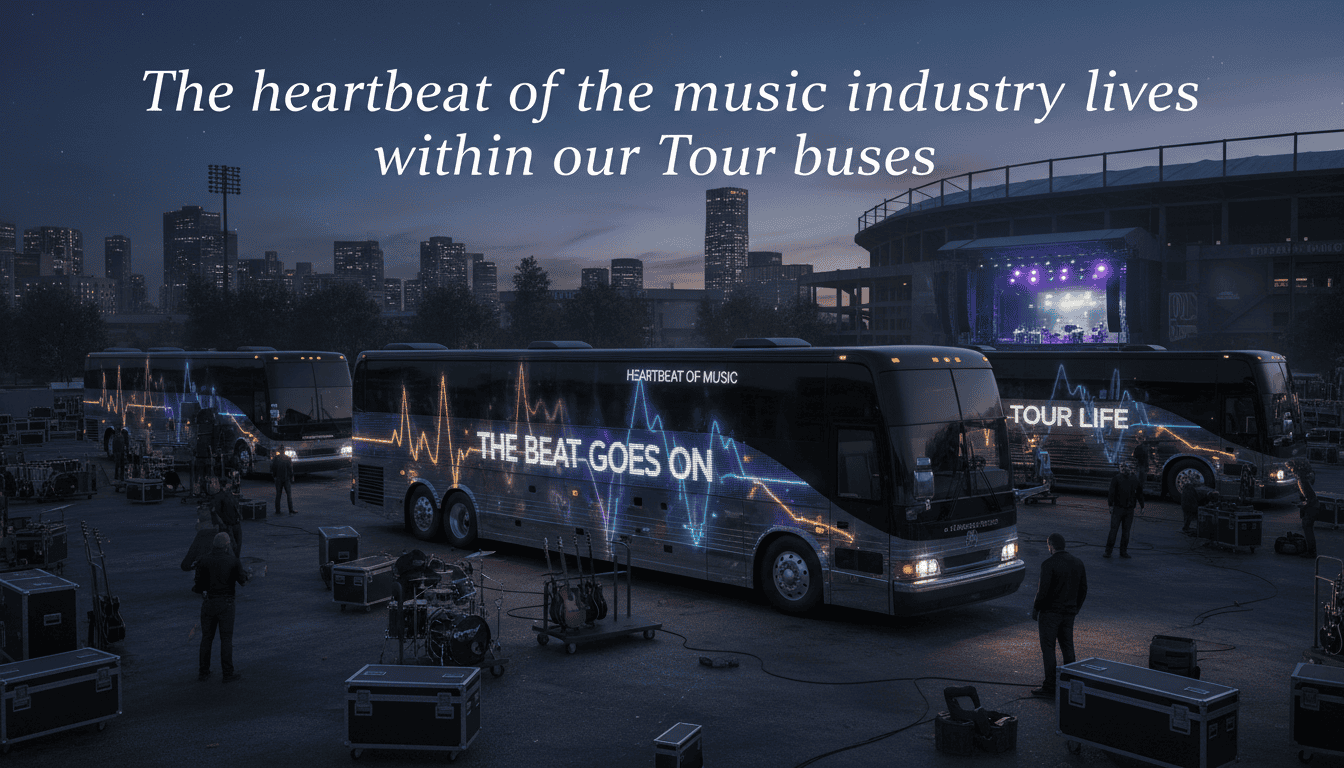
The heartbeat of the music industry lives within our Tour buses
The Heartbeat of the Music Industry
The roar of the engine, the hum of the generator, the rhythmic sway of the road beneath you – these are the sounds of the modern-day heartbeat of the music industry. It’s not found in the glitzy record labels, the sold-out stadiums, or even the meticulously crafted melodies; the true, pulsating lifeblood of music often resides within the confines of a tour bus, a mobile ecosystem that fosters creativity, camaraderie, and the relentless pursuit of connection with fans across the globe.
For decades, the tour bus has been the unsung hero, the often-overlooked backbone that enables artists to translate their studio magic into a living, breathing, evolving stage show. It’s more than just transportation; it’s a sanctuary, a rehearsal space, a recording studio, a dining hall, a hotel room on wheels, and, most importantly, a crucible where relationships are forged and broken, where inspiration strikes in the dead of night, and where the true grit of a musician is tested and refined.
Beyond Transportation: A Mobile Ecosystem
The tour bus represents a unique blend of practicality and possibility. On the surface, it’s a meticulously organized space designed for efficiency. Beds are stacked like Tetris blocks, maximizing limited room. Luggage compartments swallow a seemingly impossible amount of equipment and personal belongings. A galley kitchen allows for meal preparation, saving both money and the monotony of roadside diner food. A bathroom, however cramped, provides a semblance of normalcy on the road.
But dig a little deeper, and you discover the intricate web of life that thrives within these steel behemoths. Imagine the scene: an artist, exhausted but energized after a roaring show, retreats to their bunk, scribbling down lyrics inspired by the roaring crowd. The guitarist, hunched over a laptop in the lounge, is experimenting with new riffs, fueled by the adrenaline of the performance. The drummer, plugged into headphones, is practicing intricate fills, preparing for the next night’s set. The tour manager, juggling logistics and budgets, works tirelessly to ensure that the machine keeps running smoothly.
This constant interplay, this fusion of talent and dedication, is what makes the tour bus so vital. It’s a place where ideas are born, where songs are written and rehearsed, where setlists are refined, and where the entire performance comes together. The constant proximity to each other, the shared experiences, the long hours on the road – all contribute to a unique creative synergy that simply can’t be replicated in a studio setting.
Camaraderie and Conflict: The Human Element
Living in such close quarters, often for weeks or months at a time, inevitably leads to both profound camaraderie and inevitable conflict. The bonds forged on tour are often stronger than family ties. The shared struggles, the late-night conversations, the inside jokes – these create a deep sense of connection and loyalty. Tour members become a family, supporting each other through the highs and lows of the road.
However, the intense environment can also breed friction. Personalities clash, tempers flare, and the pressure to perform night after night can take its toll. The lack of privacy, the constant noise, the cramped spaces – these can all contribute to stress and tension. Learning to navigate these challenges, to communicate effectively, and to respect each other’s boundaries is crucial for survival on the road.
The ability to work together, to overcome disagreements, and to maintain a positive attitude is essential for the success of the tour. A dysfunctional tour bus can quickly derail a band’s performance, leading to strained relationships and ultimately, a failed tour.
A Mobile Recording Studio: Capturing the Magic
In recent years, the tour bus has evolved beyond a simple transportation and living space. Advancements in technology have transformed it into a mobile recording studio, allowing artists to capture their creative impulses while on the road.
Imagine a scenario: a band is driving through the desert after a sold-out show. Suddenly, the lead singer is struck with an idea for a new song. They pull out their laptop, plug in a microphone, and begin recording the initial melody. The guitarist joins in, adding chords and harmonies. The drummer lays down a simple beat. Within hours, a rough demo of a potential hit song is born.
This is the power of the modern tour bus. It allows artists to capture their inspiration in real-time, without the constraints of a traditional studio environment. It also allows them to experiment with new sounds and ideas, free from the pressure of deadlines and expectations.
Many artists have even recorded entire albums on the road, using the tour bus as their primary recording studio. This allows them to capture the raw energy and spontaneity of their live performances, creating albums that are truly authentic and unique.
The Tour Bus as a Training Ground: Honing the Craft
The road is a brutal teacher. It demands resilience, adaptability, and unwavering dedication. For young musicians, the tour bus serves as a rigorous training ground, forcing them to hone their craft and develop the skills necessary to survive in the music industry.
They learn how to manage their time effectively, balancing rehearsals, performances, and travel. They learn how to deal with stress and pressure, performing night after night in front of demanding audiences. They learn how to work as a team, supporting each other through the challenges of the road.
The tour bus also provides invaluable opportunities for networking and building relationships. Artists meet other musicians, promoters, venue owners, and industry professionals, expanding their network and opening doors to new opportunities.
Beyond the Glamour: The Realities of Life on the Road
While the image of the tour bus often conjures up images of rock stars partying and living a glamorous lifestyle, the reality is often far more mundane. Life on the road is hard work, demanding long hours, constant travel, and limited personal space.
The food is often unhealthy, the sleep is erratic, and the showers are infrequent. The constant noise and vibration can be exhausting, and the lack of privacy can be stifling. Loneliness and homesickness are common, especially for those who are new to touring.
Despite these challenges, many musicians find the rewards of life on the road to be worth the sacrifices. The opportunity to connect with fans, to perform their music live, and to experience new places is a powerful draw.
The Future of the Tour Bus: Embracing Technology and Sustainability
As the music industry continues to evolve, so too will the tour bus. Advances in technology are already transforming the tour bus, making it more comfortable, efficient, and connected.
High-speed internet access allows artists to stay in touch with fans and manage their online presence while on the road. Advanced sound systems and recording equipment allow them to create high-quality music on the go. Smart home technology allows them to control lighting, temperature, and entertainment systems with the touch of a button.
Sustainability is also becoming a growing concern for the music industry, and tour buses are being designed with more eco-friendly features. Solar panels, hybrid engines, and water-saving technologies are becoming increasingly common, reducing the environmental impact of touring.
Conclusion: The Undying Rhythm of the Road
The tour bus is more than just a vehicle; it’s a microcosm of the music industry, a place where dreams are realized, relationships are forged, and the relentless pursuit of artistic expression continues. It’s a place where the heartbeat of music resonates, fueled by the passion, dedication, and unwavering spirit of the artists and crew who call it home. From the early days of cramped vans and rickety buses to the modern marvels of luxury touring coaches, the essence remains the same: the road calls, the music beckons, and the tour bus remains the faithful vessel carrying the heartbeat of the industry to fans around the world. The rhythm of the road, the hum of the engine, the sway of the bus – it’s a constant reminder that the music never stops, and the journey is just as important as the destination.
Related Posts
 Tour buses that turn the long haul into a luxury vacation
 Party Buses with Dancing Pole in NYC
 Large Group Birthday Party Buses in NYC | Bubz Limos NYC
 NYC Coach Bus for Sightseeing Tours
 Wine Tour Party Bus for Groups
 Party Bus to Wineries Long Island
 Best Party Buses in New York for Any Occasion
 Long Island Winery Tours by Party Bus